Pages

Thursday, September 9, 2010

Entering Jasper National Park


The word Jasper alone evokes all kinds of inevitable comparisons.

Jasper. The Canadian Rockies' other park. Jasper. Banff's quieter sibling. Jasper. Just like Banff except with more glaciers and less lakes.


Many visitors, faced with limited time and budget, are bound to ask the question of "how much time should I budget for Jasper while I visit Banff?" That's quite unfortunate of course, as anyone who has spent more than a couple days in both parks can tell you that each has many unique things to offer. We were fortunate to spend three nights in the town of Jasper, yet the vast expanse of the surrounding wilderness seemed like it would take at least a couple of weeks to properly appreciate.


While both Banff and Jasper offer spectacular, world class views and adventures, I feel that the main difference between the two parks is due to geography. Banff is 1.5 hours from Calgary (and thus from a major international airport) and an easy day-trip destination; Jasper on the other hand requires much more time and effort to visit and deters many casual tourists. This advantage leaves Jasper with a less commercialized townsite, less crowds to get in the way of great pictures, and most importantly to most visitors, an amazing abundance of wildlife.


And we didn't have to travel far to start running into these locals. Note the wires at the top of the picture -- these white-tailed deer were foraging at the edge of the townsite. In fact during our three days in Jasper, we could hardly travel an hour without running into some species of deer, elk, bighorn sheep, hoary marmot or ground squirrels.


We were enjoying the scenery somewhere between Medicine Lake and Maligne Canyon when we saw this pair of massive antlers sticking out from a bush on the roadside. I was able to walk within 5 metres from this gentle giant of a bull elk, and he was too busy scratching his forehead against a small tree to bother even looking at me.


In fact, the Maligne Lake Road was the most prolific wildlife viewing area on our entire trip. The rock face above Medicine Lake's north shore seems to contain certain mineral deposits, known locally as a "salt lick," which attracts herds of bighorn sheep from higher elevations. We came across at least two different herds, lounging along the grassy roadside and licking at the natural salt deposit. This huge ram in the picture stared down the oncoming traffic, while its harem of ewes congregated to taste the rocks in salty bliss.


The 48km drive along Maligne Lake Road is just packed with wildlife, spectacular views, as well as easily accessible scenic walks. The grey limestone cliffs of the Maligne Canyon, polished for millenia by the glacial water of Maligne River, is only one of the many beautiful canyons and falls within Jasper National Park.


Following the canyon upstream leads to the rocky shores of Medicine Lake, which drains into the canyon through an extensive underground cave system. During our visit in July it looked just like any other emerald-colored lake in the Canadian Rockies, but will soon start to drain and turn into a large mudflat in a matter of months.


The reflection of Spirit Island in the deep turquoise of Maligne Lake is no doubt the quintessential image of Jasper National Park, and one of the most recognizable images of the Canadian Rockies. Be prepared though, to fork out a steep CAD$55 for the 90-minute boat tour (or to paddle about 40km roundtrip, which is near impossible to do in one day). So we were content with strolling the well-maintained footpaths on the lake shore, and opted for the panoramic view from the Bald Hills which was free.


The Parks Canada brochure described the Bald Hills trail as medium intensity, 10 km round-trip, 4 to 6 hours to the lookout and back. Now I have to admit that we're novice to intermediate hikers, physically unfit (we're both office workers and don't regularly work out), and it was our first hike in about a year. It took us only 2.5 hours to reach the lookout, and 4 hours round-trip including lunch and wandering around the lookout for 30 minutes. I figure if we can do it as a half-day hike, any reasonably fit person can do it, as a great addition to a day at Maligne Lake.


The panoramic view of snowy peaks crowning Maligne Lake from the Bald Hills lookout was definitely worth the 4 hour round-trip. A complete 360-degree panorama can be gained by means of a further 45-minute hike to one of Bald Hills' peaks, for those more adventurous (and more physically fit) than us.

These are only some of the sights along the Maligne Lake Road -- I haven't even started with my photos of the wildly scenic and more famous Icefield Parkway. That will come in the next couple of posts.


THE TOWN OF JASPER


The only real settlement within a vast 10,000km2 national park, the town of Jasper is a true gem of a Canadian small town -- large enough to cater to the demands of modern tourism, yet small enough to remaining peaceful, unpretentious, and authentically Canadian. This is a quality that the now internationally-flavored "village" of Banff has lost forever.

You won't find any major retailers like The Bay or even a neighborhood Safeway -- the largest store in town is a locally owned, 90-year-old grocery store (Robinsons Foods). The major bank (CIBC) occupies a beautifully maintained heritage house, as does the Parks Canada information centre. The two main drags (Connaught Drive and Patricia Street) are filled with small eateries and watering holes, nondescript souvenir shops, and a high concentration of outfitters and outdoor equipment stores. Fast food franchises like McDonalds and A&W are marginalized to the edge of the commercial district.


CHEAP EATS AND CHEAP SLEEPS IN JASPER


No disrespect to the dining scene in Jasper and Banff, but we would have chosen Montreal and Quebec City for our vacation if the best Canadian cuisine was our focus. Here in Jasper we chose to spend more of our time in the great outdoors, and sought recommendations by locals on where they would go out for inexpensive, quality food.


BEAR'S PAW BAKERY
Address: 4 Cedar Avenue, Jasper
Hours: 06:00-18:00 Daily
Website/Map: Official Website
Directions: Corner of Cedar Avenue and Connaught Drive, half a block from the train station.


We sampled a number of eateries based on our guesthouse host's recommendations -- a steakhouse, a pizza and taphouse, and a sushi restaurant among them. Here I'm passing on to you the number one worthiest recommendation -- a tiny, extremely popular bakery widely considered to Jasper's best.

We were first introduced to this little bakery by a fellow blogger, secondly by our guesthouse, and thirdly ... most importantly ... by the incredible amassment of 40 or so customers lining up within the tiny shop for fresh-off-the-oven baked goods in the morning. Some were tourists, but many were locals walking down the block in shorts and sandals for their daily dosage of freshly brewed coffee and muffins.


Prices were very reasonable for a small town -- around CAD$1.5 for bakery items such as scones, sausage rolls or cinnamon rolls. Pictured above is the shop's signature item aptly named ... what else ... Bear Paw. It's actually a cutely shaped cinnamon roll -- not too flaky, not too sweet, but filling enough to power our mid-morning hike up the Bald Hills. I regret not taking a photo, but the sausage roll was definitely one of the best I've ever had.

For budget travelers like us, Bear's Paw also sells decent sandwiches for a measly CAD$4.5, probably among the cheapest in town (Robinsons Foods has a different selection, but costing a little more). We made them our designated lunch supplier for our daily hikes and excursions in Jasper.


SELDOM IN GUESTHOUSE
Address: 123 Geikie Street, Jasper AB
Price: $95 including tax in high season; double room with ensuite bathroom; breakfast not included
Website: http://www.bbcanada.com/11539.html


The entire town was nearly fully booked during July's peak season, and there just weren't a lot of options when it came to inexpensive lodging -- cheaper hotels in town generally charged $150 and up for double rooms, guesthouses charged anywhere from $90 to $120, the town's HI hostel charged $71 for a private double with shared bathroom, while dorm beds ran around $30.

We booked several months ahead at a little guesthouse on the northern side of the town, run by a Canadian couple with the help of a couple of Japanese assistants. Seldom In Guesthouse gave us a smallish but spotlessly clean room, with a huge ensuite bathroom and shower, for $95 including tax. Breakfast was not included, but coupons for complimentary coffee at Bear's Paw Bakery was provided.


An advantage of staying at guesthouses is of course the use of the living room, fridge, microwave and other conveniences of staying in a fully functional home. The clear view of the mountain peaks from our room window was just an added bonus.

Monday, September 6, 2010

15-Day Slow-trip through Canadian Rockies and Prairies - Itinerary


A Spanish travel companion once asked for my personal recommendation of Canada's best destinations.

Niagara Falls? Oh please ... it's not even the best of Ontario in my opinion. The old towns of Quebec City and Lunenberg? Now that's world class ... but my European friend would feel just like vacationing at home. The northern lights, walruses and Inuit people of Nunuvut would make the ultimate Canadian adventure ... but the cost of CAD$4000+ per person isn't affordable for most. So I came up with my definitive answer ... the Canadian Rockies, pristine, majestic and easily accessible.


To me, touring the Rockies is a very Canadiana thing that every self-respecting Canadian should do at least once in his/her lifetime. But it was painfully embarrassing that although I lived only a day's drive from Banff and Jasper, I had never spent more than a half-day in the Rockies. That, of course, doesn't fit anyone's definition of "touring" -- this is a world-class destination that deserves more than a week's time.


Not anymore! Finally I've put together a proper vacation in my own Canadian backyard, to slowly savour the worthiest destination of my own country on a 15-day slow-trip. This would be a long, long road trip, covering 4,500 km through the interior of British Columbia and southern Alberta, through immaculate river valleys, chilling mountain passes, and boundless prairies under the scorching summer sun.


The Rocky Mountain national parks of Banff, Jasper, and Yoho are of course this trip's star attractions, but southern Alberta is jam-packed with three more lesser-known UNESCO World Heritage Sites, separated by only a day's drive. Dinosaur Provincial Park and Waterton Lakes National Park are highly underrated and unknown to most Canadians, but that's where some of my favorite photos were taken.


After much planning, our final itinerary evolved to something like this:

Day 01: Vancouver - Yellowhead Highway - Jasper National Park
Day 02: Maligne Lake - Maligne Canyon
Day 03: Columbia Icefield
Day 04: Icefield Parkway - Banff National Park
Day 05: Sunshine Meadows
Day 06: Lake Louise - Bow Valley Parkway
Day 07: Calgary
Day 08: Drumheller - Dinosaur Provincial Park
Day 09: Southern Alberta's Prairies - Fort MacLeod - Head-Smashed-In Buffalo Jump
Day 10: Waterton Lakes National Park (Canada) - Glacier National Park (USA)
Day 11: Waterton Lakes National Park
Day 12: Bar U Ranch - Banff - Yoho National Park
Day 13: Yoho National Park
Day 14: Yoho National Park - Mount Stephen Hike
Day 15: Golden - Vancouver


I'm currently planning about 10 posts over the next few months, with a couple hundred photos in the works. Many readers and friends have prodded me for new materials after more than a year's hibernation ... so it is. Stay tuned!

Friday, August 7, 2009

A Canadian's Favourite Spots in Canada

This is the index page of my favorite places to recommend to readers planning on visiting Canada.

As a Canadian traveler I’m sometimes asked to recommend places to visit in Canada. To make things accessible for most readers, I usually keep my recommendations:
- easily accessible by rental car or public transport
- reasonably economical, or at the very least provide a good value
- most importantly ... an authentic local experience

I hope the following articles will provide some useful info for future visitors to Canada. This page will keep expanding as I upload more of my past trips within my own country. Enjoy!


15-Day Slow-trip through Canadian Rockies and Prairies - Itinerary
Click HERE to Enter


Photo Sequence of a World Famous Road - Canada's Icefields Parkway
Click HERE to Enter


Banff's Spectacular Sub-Alpine Meadows
Click HERE to Enter


Yoho - Banff's Scenery with a Tenth of the Crowds
Click HERE to Enter


Canada's (Almost) Unknown World Heritage Site
Click HERE to Enter


Entering Jasper National Park
Click HERE to Enter


Up Close and Personal with Athabasca Glacier
Click HERE to Enter


A Guided Hike to Canada's World Famous Fossil Site
Click HERE to Enter


Crown of the North American Continent
Click HERE to Enter


A World Class Museum in the Middle of Nowhere
Click HERE to Enter


Our 2,000 km Drive across the Alberta Prairies
Click HERE to Enter


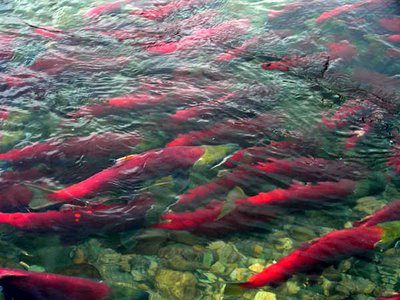
Adams River Salmon Run - Mini Guide
Click HERE to Enter

Saturday, June 20, 2009

On The Road Again!

Yes, it's that time of the year again. You can expect some fresh stories and photos from our mystery destination when we get back. But the downside is ... I won't be answering emails and comments for quite a while!

Ciao!

Sunday, April 5, 2009

Broiled Unagi with a Twist - Nagoya's Hitsumabushi

Food Review: ATSUTA HOURAIKEN, HONTEN (Nagoya)
Address: Aichi-ken Nagoya-shi Atsuta-Ku Godo-cho 503
Hours: 11:30-14:00, 16:30-20:30 (Closed Mondays)
Website/Map: Official Website (some English pages)
Directions: Print out the map at the official website above ... this is one of the city's most famous restaurants, so most locals should be able to point you in the right direction once you get to the southern gate of the Atsuta Shrine. The closest subway is Tenma-Cho Station on the Meijo Line.


Being a huge fan of broiled Unagi, I decided a few years ago that someday ... I would travel to Japan on a pilgrimage to seek out the two main schools of Unagi-broiling.

No this isn't a joke. Eventually I did just that ... not in the form of one long pilgrimage, but on two separate trips to Tokyo and Osaka. It was 2005 when I visited the undisputed academy of Kanto-Ryu (Tokyo Style) school of Unagi-broiling, the 260-year-old restaurant Izuei Honten (full review here) in Ueno, Tokyo. Then in 2008 I visited the lesser-known but reputably one of the best Kansai-Ryu (Osaka Style) Unagi specialists in Osaka, at the unforgettable Kuromon Kawahiro (full review here). Needless to say these are memories that would last a lifetime for the epicurean in me.

Which school did I prefer? While I appreciated the softness and the alluring aroma of the Kanto-Ryu, I absolutely fell in love with the boldness of the Kansai-Ryu Unagi ... the thunderously crunchy skin, the rich oiliness of the flesh, and the full-bodied basting sauce! Now you may be asking, what does THAT has to do with this restaurant review in Nagoya?

It does. Because our trip to Central Japan allowed us to pay homage to a third major school of Unagi-broiling -- the distinctive Chubu-Ryu (Central Style) developed around Nagoya. How does this third school compare to the Tokyo and Osaka Styles? Here's my own little explanation:


Simply speaking, Tokyoites slice open the Unagi at the back, while Osakans gut the fish at the belly. Tokyo Style involves steaming the fillet between sessions of slow broiling, while Osaka Style just broils the fish for a longer time. And the Central Style? Situated halfway between the cultural dominant Tokyo and Osaka, Unagi chefs around Nagoya are said to have blended Tokyo's back-splitting with Osaka's approach of slow-broiling into a style of their own ... or supposedly so. But to most Japanese food lovers, putting Unagi and Nagoya in one sentence would always equate to one famous dish -- the Hitsumabushi.


The term "Hitsumabushi" is a registered trademark of Atsuta Houraiken, one of Nagoya's older and most celebrated restaurants. Perched in the shadow of the grandeur of Atsuta Jingu (often regarded as one of Japan's Top Three Shrines ... depending on who you talk to), Houraiken is said to have prospered for over 100 years in a symbiotic relationship with the shrine. For religious pilgrims, the anticipation of mouth-watering Unagi makes for a delicious distraction to the mundane shrine visit. And for the gourmands, there's no better place to work off the cholesterol after lunch than a leisurely stroll in the vast shrine grounds.

At the time of this visit, Houraiken operated three full-service restaurants, two situated within a couple blocks to the south of the shrine. Despite arriving at 11:00 for an early lunch on a Sunday, we found ourselves waiting behind 50 locals at the newer branch just adjacent to the shrine grounds. No worries we thought, as we walked over to the original branch on the other side of the road, hopeful of a shorter wait. We ended up behind about 70 people in the queue ...


Welcome to the culinary institution of Atsuta Houraiken, established in the 6th Year of Emperor Meiji, or Year 1873 in the Western world. Complementing its reputation as the city's premier Unagiya, the restaurant complex contained quite an impressive labyrinth of banquet halls and smaller rooms, and we were promptly seated within 20 minutes despite the lineup. Compared to the Unagiyas we've visited in Tokyo or Osaka, the clientelle here seemed to be much younger and more casual, perhaps as a result of its inclination to attract the tourist crowd. It would take another 30 minutes before the familar smell of freshly broiled Unagi arrived at our low table, enough time for us to read up on the restaurant's guide on "HOW TO EAT HITSUMABUSHI."

What's so special about Hitsumabushi that necessitated an etiquette guide for first-timers like myself? I've seen Tokyoites eating their Unadon unceremoniously, and Osakans digging into their Mamushi with even more gusto. But at Nagoya, the Hitsumabushi is meant to be consumed in at least three servings ... or four servings as suggested by the restaurant. Here's how it went down for me ...


Serving #1. Divide the ohitsu (wooden container) full of Unagi and rice into four quadrants. Transfer one portion into a rice bowl, then eat it straight just like any regular Unadon. This serving is supposed to present the broiled Unagi in its original form, allowing the palate to discern its true taste before the adding of condiments in the latter stages.

To my palate, the flesh of this Unagi was quite fatty, juicy and without any hint of the "muddy taste". The skin was soft and moist, perhaps as a result of its placement on top of the steaming hot rice, which is more reminiscent of the Tokyo Style. But on the other hand the glaze on top was very strong, thick and flavorous, all characteristics of the Osaka Style.

And lastly, flipping over the Unagi fillet revealed that the fish was gutted at the belly side, a la Osaka Style. So you can say that this was quite the middle ground between the two main influences, with a Nagoya-specific variation that, in order to be easily mixed into the rice with the condiments later, the fillet was sliced into narrow strips.


Serving #2. Transfer a second portion into the rice bowl. Add Wasabi, roasted Nori and green onions, then mix the condiments well into the Unagi and rice. Now things are beginning to get interesting ...

What a wonderful clash of flavors this turned out to be, with the intense Wasabi and raw green onions adding a whole new layer of flavors on top of the heavily glazed Unagi. Now I understood why the basting sauce had to be so thick and savory, as anything weaker would have been easily overpowered when combined with the Wasabi and green onions. A mouthful of Unagi, then a mouthful of rice, all brought together by a seemingly unorthodox mixture of bold and complex tastes -- this was by far my favorite serving of all.


Serving #3. Transfer a third portion to the rice bowl. Add the Wasabi / seaweed / green onion mixture as before. Only this time top it off by pouring a Dashi-broth on top of the rice.

Now this is going off on an entirely different tangent -- what started as an Unadon, which turned into a uniquely flavored Unadon, finally turned into an Ochazuke. I could only make an educated guess, but this was probably meant to cleanse the oily palate (not to mention the digestive tracts) after the previous servings. The broth was definitely a fish-based Dashi, and it was likely the best Ochazuke I've ever had. However I found the step-down from Serving #2 to be a little too abrupt, but perhaps that's just me.


Serving #4. This was where each client gets to revisit his or her favorite serving out of the three. My wife, the Unagi purist, chose option #1, whereas I elected to have my favorite serving with all the fixings as per #2. With an Unagi this good, you can't really lose with any of the three choices.


Now the final verdict -- so how does the 135-year-old Atsuta Houraiken's Unagi compare to ... say the 260-year-old Ueno Izuei of Tokyo?

Apples and oranges really. Tokyo Style is more about softness and subtlety, and the delicate tinge of smokiness coming through that delicateness. Nagoya Style appears much closer to Osaka Style according to my tastebuds, and the boldness of the taste is accentuated dramatically by the unique addition of condiments. Just like Osaka Style, I would classify Nagoya Style as more of a man's Unagi, as opposed to the more feminine Tokyo Style.

But at the end, Atsuta Houraiken still can't match my favorite Unagiya, the unheralded Kuromon Kawahiro of Osaka, in terms of taste. Houraiken's Serving #2 came close in terms of the complexity of flavors, but without the incredible crispiness, juiciness and thickness of the fillet. And I admit nothing beats watching a masterchef single-handedly crafting the most incredible broiled Unagi in front of my eyes from start to finish, but that's too tall an order for a century-old corporation.

Bill for Two Persons
Hitsumabushi x 25460 yen
TOTAL5460 yen (CAD$55)


EPILOGUE


We did follow the footsteps of the local gourmands and visited the Atsuta Jingu. It is after all one of the most famous shrines in Japan, and the safe-keeper of one of the Three Imperial Regalia said to have been bequeathed to the ancient Japanese royalty by the Gods ... or by a more advanced civilization ... depending on which professor you ask. If you're already wondering ... No, the legendary Grass Cutting Sword (Kusanagi-no-Tsurugi) is never displayed for public viewing, but that's no reason to skip this serene oasis in the middle of Nagoya's urban sprawl. Besides, did you know that Unagi is, gram-by-gram, one of the highest in cholesterol among all foods? There IS some collective wisdom in taking a stroll to the big shrine.


Perhaps that's why I ended up buying a traditional Kyusu for making green tea that afternoon ... subconsciously I just knew it was going to take weeks for me to work off that extra cholesterol. But that's okay. That's worth it. If you ask me now what my favorite memory of Nagoya is, I'll tell you in two words -- Atsuta Houraiken.

Thursday, March 5, 2009

Traveling the Ancient Nakasendo Highway - Part 4: Magome-juku


It was both a curse and a blessing -- the heavy downpour that plagued us through our hike also escorted us into a surprisingly deserted Magome-juku.


No crowds, no tour buses, just pure breath-taking townscape in the traditional contrast of white plastered walls upon dark wooden facades. Yes the weather was absolutely crappy, but the flipside was a rare glimpse of the town's rural tranquility with the effect of modern tourism. To entirely misquote Charles Dickens, it was the best and the worst of times to arrive at Magome.


This was also a fitting place for the final evening of our self-guided tour of Central Japan, which had seen us through a pristine National Park, a pair of ancient hamlets and several old provincial capitals. At the end we arrived at this historical town along the old Nakasendo Highway, quiet enough to sit back and enjoy our last evening in Japan but close enough to Nagoya to not miss our flight the next day.


Magome-juku was the third and southern-most post-town we visited in the ancient Kiso Valley, famous for its excellent preservation of feudal-era traveler stops along its stretch of the path that connected the Imperial Court in Kyoto to the Tokugawa Shogunate's power in present-day Tokyo. Originally designated as one of the 69 Shukuba (ie. rest area; hence the "-juku" suffix) along this Nakasendo road, the town of Magome narrowly escaped modernization along with Tsumago due to the same reason -- the Chuo Honsen railroad never got very close to the town. Today the nearest train stations of Sakashita and Nakatsugawa are a 20 minute bus ride away, which still works well to deter some of the lazier tourists.


Compared to its neighbor Tsumago in the Nagano Prefecture, Magome and the Gifu Prefecture have directed the tourism revenue into maintaining a better organized, tourist-friendly town that also appears somewhat deliberately staged. The main street that runs the entire length of the town has been recently repaved with perfectly-cut granite stones, and virtually all of the old peasant townhouses have been reborn as souvenir shops or restaurants. Or at least that's the fate of the street-facing front of the houses ... the backside of the houses remain private residences, mostly to the modern descendants of original families who had lived in this town for centuries.


Rebuilt after successive fires at the turn of the 20th Century and elaborately manicured into the ideal Japanese feudal townscape over the recent decades, the town of Magome has gained somewhat of a reputation as a tourist trap. On any given day coach-loads of domestic and foreign tourists would be dropped off at the large parking lot at the top of the town, given a hour to do their sightseeing and obligatory souvenir shopping along the picture-perfect main street, and picked up again at the bottom of the town.


But not on this day. By 15:00 the monsoon rain had chased off the day-tripping tourists and uniformed students on their annual excursions, leaving behind just a ghostly shell of the normally bustling town. Occasionally an odd remaining tourist would pass by, huddling beneath an under-sized umbrella and hurrying off to the next destination. It's funny that no matter how successful the town may have been in adapting to the demands of 21st Century tourism, the weather still functions as the great equalizer to restore everything back to their old ways.


A day-tripper could probably rush through all the famous landmarks in a matter of an hour. The town's main entrance at the uphill end features a re-creation of the old Kosatsuba, the official bulletin board for the feudal government's old edicts and laws. The town's major museum, an elegant reconstruction of the birthplace of famous novelist Shimazaki Toson, is located near the halfway point of the town. And towards the bottom, the main street takes a sharp 90-degree turn to the left as a defensive feature to confuse any would-be attackers and bandits. After that, a time-crunched passer-by could reasonably claim to have toured all of Magome-juku.


But to the town's credit, its beauty and culture run much deeper beyond the few advertised attractions. On one side of the steeply inclined main street stood two giant water wheels, one belonging to the Minshuku Magomechaya, and a second one belonging to an uninhabited, nameless hut that seemed to have no owner but the town itself. In this torrential downpour the wheel howled furiously in a spinning frenzy, driven by the rainwater channeled down from the mountain and through the length of the town. At first glance it would seem the most unlikely place for a peaceful refuge from the rain for wet and weary travelers.


What a pleasant surprise awaited curious travelers inside -- a clean, warm and cozy rest-stop available to anyone free-of-charge, complete with an Irori fire pit that was still burning when we arrived around 17:00. The rugs were clean enough to lie down upon, and the decor was entirely authentic with a traditional step-ladder cabinet ... you know what I'm getting at ... although I wouldn't recommend it, if you're a single backpacker who happen to be "passing through" Magome in the warmer months without a guesthouse reservation ...


Well, that may be of more interest to the frugal backpackers. For the more affluent tourists the town's myriad of souvenir stores may be a bigger attraction, even though much of the selection may seem familiar at first glance. But looking a little closer you'll discover remnants of the region's indigenous culture that you simply won't see anywhere else in Japan. At one shop we even saw an sign that stated "Hachi-no-ko / Inago Arimasu" -- or "Bee Larvae and Grasshoppers Available" -- right next to the Hello Kitty and Doraemon merchandises. Please see the previous article on Tsumago-juku if you've got the appetite for a picture of deep fried grasshoppers in a sweet soy-sauce glaze.


In terms of popularity among Japanese tourists, one of the big sellers at the souvenir stores is this traditional intestinal medicine known as Ontake Hyakuso-gan. This herbal remedy is said to have been invented by followers of an animistic cult worshiping the snow-capped peak of the nearby Ontake Mountain, and became a popular treatment for upset stomachs and diarrhea for these pilgrims. Today you can purchase it in the form of bottled pills for a few hundred yens at most stores in town. You can find more information on the manufacturer's English website if you're curious.


Then there are the ubiquitous street snacks such as the "Hand-roasted Senbei" crackers advertised here. If you're hungry for a quick and filling bite, I highly recommend a local form of grilled rice-cake-on-a-stick known as Gohei-mochi. Roasted sparrows (Suzume) are supposed to be another popular snack in this region, but sadly we didn't run into any sparrow vendors on this rainy day. And besides, it was getting close to dinner time at our Minshuku guesthouse anyway.


We wouldn't miss the magic of the evening stroll, even if it meant walking the slippery incline of the main street in this unrelenting rain. Much like Tsumago-juku on the previous night, the town of Magome-juku slipped back a couple hundred years into the feudal ages again, illuminated by nothing but the hanging lanterns and the dim light seeping through the dark wooden lattices of the Machiya houses. By far this was my favorite experience at Magome. There was the inconvenience of having to carry a traditional wax-paper umbrella provided by our guesthouse, but that's also part of the romance of these old-fashioned small towns, depending on how you choose to look at it.


So how much time should an independent traveler allot for visiting Magome-juku? A couple hours is clearly not enough to fully appreciate the town, and besides this kind of old-town scenery is typically best at sunset or early morning. I would suggest a 2-day trip combined with Tsumago-juku, and the night can be spent at either town. Having stayed overnight at both towns, I felt that the larger and more commercialized Magome was better for walking and souvenir hunting, while the smaller and older Tsumago was more suitable for unobstructed photo-ops in the early morning. I happened to have taken more of my favorite photos at Tsumago, but I guess that's just my gut feeling.

As I mentioned we stayed at a traditional Minshuku, in fact the most famous Minshuku in this small town ...


Hotel Review: TAJIMAYA (Magome-juku)
Address: Gifu-ken Nakatsugawa-shi Magome 4266
Price: 8400 yen per person including dinner and breakfast
Website/Map: http://www.takenet.or.jp/~marutaji/
How To Book: Through the official website
Directions: Right at the centre of town ... you can't miss the wooden cart and the waving Tanuki.


Some may call it a deliberate showcase of all things nostalgically Japanese -- sun-faded Noren curtains and dark wooden lattices, dim lanterns and broken farmhouse equipments, and even a little Kawaii mascot (actually a stuffed Tanuki) to grab the attention of passing tourists. But to us, this was simply one of the most aesthetically striking Minshuku guesthouses we've stayed in.


Now this isn't just an ordinary Minshuku -- for more than 200 years Tajimaya has been a local fixture, and is currently the oldest accommodation establishment in town. In fact the manager, a spectacled middle-aged man who can speak reasonable English, is the 8th Generation descendant in a long line of inn-keepers. If Japanese culture and tradition is of any consideration to you in your choice of accommodation, I don't think you can find a more distinguished place to stay within Magome.


That's not to say that the building is old and creaky -- it just means that you'll encounter certain antique features you won't find in most Japanese households, the most obvious of which is the Irori firepit in the greeting room. In the evening the manager would bring all the guests around the fire and teach the region's indigenous folk dance known as Kiso-odori for free. Frankly I think he's really enjoying it.


Fire has been Magome-juku's nemesis throughout its long and unfortunate history, and the town's interconnected rows of Machiya houses were burned to the ground many times. As a result the current building of Tajimaya is only a hundred years young, with much of the interior decor emulating an atmosphere of the late-Meiji / early-Taisho period.


I think emulate is the right word here, for if you look closely at the telephone, you'll see the touch-tone buttons and insertion slots for your 100-yen coins. Oh well ... at least they're well-organized enough to provide contact numbers of the local taxi company and information sheets for the region's tourist attractions.


We certainly didn't miss the chance to borrow one of the Minshuku's own wax-paper umbrellas to play in the rain. It turned out to be surprisingly effective for shielding my camera from getting wet.


The guesthouse was booked to its full capacity on this day with several 3- and 4-person groups, but quite surprisingly the two of us were assigned the best room in the house -- actually two connected chambers of 6-Tatami-mats each, with windows overlooking the historic Nakasendo road. This probably had something to do with the fact that we made our booking very early on (3 months in advance), so here's a tip if you plan on booking this Minshuku.


With a total of 12 Tatami mats we could afford the luxury of setting up our futons in one chamber and unpack at the other. As usual the room came with air-conditioning, a low table with a tea set, a small TV, towels and Yukata robes for lounging around the guesthouse. I think I even ventured outside wearing the Yukata and the house's wooden clogs, though the neighbors probably didn't appreciate it as much as I did.


As in most traditional Minshukus, bathing is communal with separate male and female baths. I can't speak for the female side, but on the male side there wasn't even a lock on the door -- you just walk in, wash and clean yourself at the showers at the side of the bathroom, then take your relaxing dip in a bathtub large enough for two, with or without other guests being present. Definitely DON'T MISS the wooden bathtub made of local Hinoki (Japanese Cypress) wood -- the moment of taking off the bathtub's lid and filling the entire room with the woody fragrance of the Hinoki was quite an experience. Plus, at upwards of 400,000 yen (CAD$4000) it was quite possibly the most expensive bathtub I've ever used.

For the reasonable price of 8400 yen, the comfort level and features of the guesthouse were definitely recommendable ... so long as you can live without a private bathroom for a night. Next you're probably wondering about the quality of the two meals that came at this price.


The dinner was actually better than what we would expect from an average family-run Minshuku -- nothing incredibly amazing of course -- but it was an exhaustive 11-course meal with local ingredients reflecting the region's culinary character. And given the guesthouse's recent popularity with international tourists, the meal featured a thoughtfully toned-down selection from the Kiso Valley's local cuisines -- that is, without the deep fried grasshoppers or bee larvae.


No horse sashimi for a change -- instead it was another local ingredient, the highly prized, nationally branded Shinshu Salmon. Despite the bright reddish flesh it's technically not a salmon, but a cross between the rainbow trout and the brown trout. The taste was somewhat comparable to farmed Atlantic salmon in Canada -- delicately textured, quite fatty, and sweet without any hint of fishiness.


Kamo-niku no Rosu Yaki. A non-traditional dish using a traditional ingredient, this grilled duck breast was presented on a bed of daikon with a soy- and yuzu-based dressing. Very soft and tender, but not as flavorous as I hoped and not quite my favorite dish.


For about the sixth time on this trip I was treated to one of my favorite rural Japanese delicacies ... I was falling love with the distinct aroma of wild-harvested Yamaudo leaves! The excellent quality of the tempura came as a pleasant surprise, especially considering the popularity of this Minshuku on this evening ... you know what I mean.


Simmered rainbow trout in a sweet soy sauce, humorously paired with ... fried potato wedges!? I must have had grilled freshwater fish about five times this week in our trip across Central Japan, so this alternate presentation in a delicious sweet sauce (Kanro-ni) was a much appreciated change.


What's a Central Japanese meal without a little hand-made Soba noodles? I've never had Soba-zushi before, and was quite surprised that the noodles were seasoned with vinegar like ordinary sushi.

The overall quality of the dinner was above average for a Minshuku, and even approaching Ryokan quality. On the other hand you could also argue that 8400 yen a night was also approaching the price of cheaper Ryokans. But when the only Ryokan in town (Ryokan Iwatake) charges another 2100 yen more for a marginally better room, I felt that Minshuku Tajimaya was a decent deal considering the lack of more stellar choices.


After an unremarkable but full breakfast the next morning, the manager drove us to the bus-stop at the bottom of the town where we caught our 08:10 bus to the Nakatsugawa train station. The rain finally stopped before we our planned arrival at Nagoya at 10:00 ... perhaps an auspicious start to our final day in Central Japan?


TRANSPORTATION

The easiest way to reach Magome is by an hourly bus from the Nakatsugawa train station, the largest transportation hub in the Kiso Valley. If you're starting out from Tokyo or Osaka, it would be quickest to take the Shinkansen to Nagoya, then transfer to an Express train in the direction of Shiojiri. The train ride from Nagoya should take about an hour.

Once you get to Nakatsugawa, take the local bus operated by Kita-Ena Bus with "Magome" as the final destination. See the official website below for the latest schedule -- just follow the English words "Nakatsugawa" and "Magome" and ignore the Japanese:
http://www.rosenzu.com/kitaena/magome.html

The other useful bus route is the infrequent Magome - Tsumago bus, the most convenient way to travel between the two neighboring towns if you're not planning to do the hike. Please see the Transportation section in the Tsumago article for timetable details.