Want to see the world's largest, most visually impressive salmon mating ritual? This guide is meant for self-guided photographers or tourists like yourself.
WHAT IS IT?
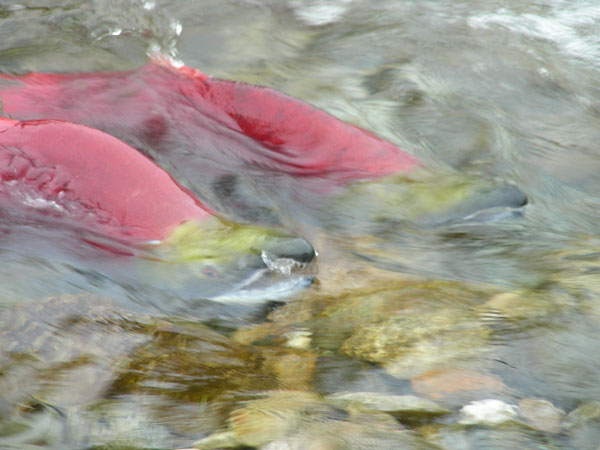
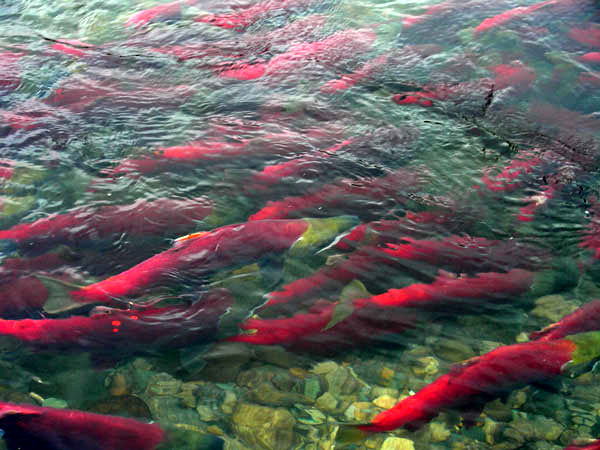
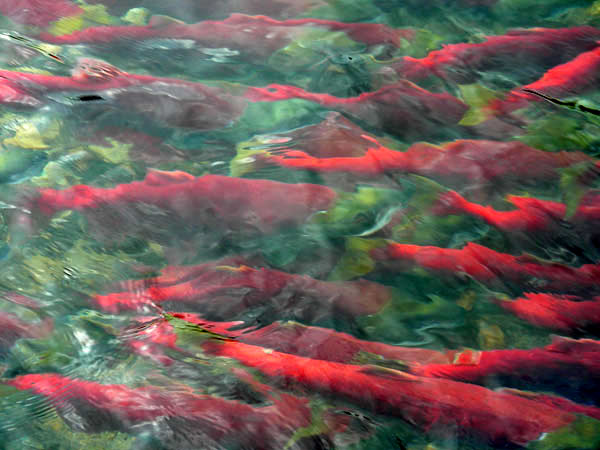
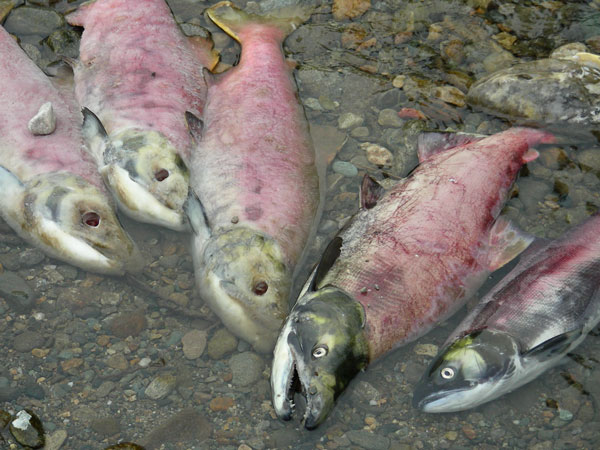
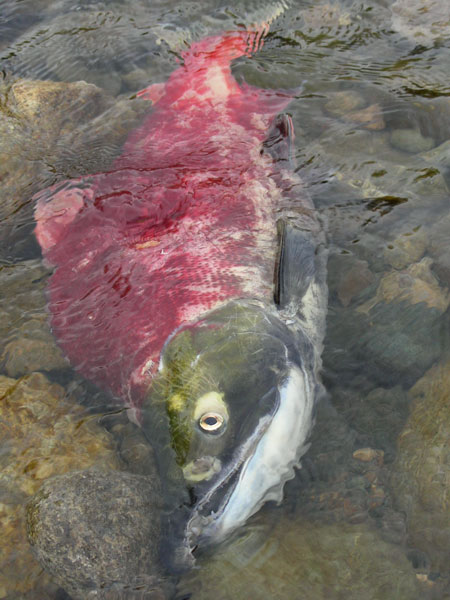
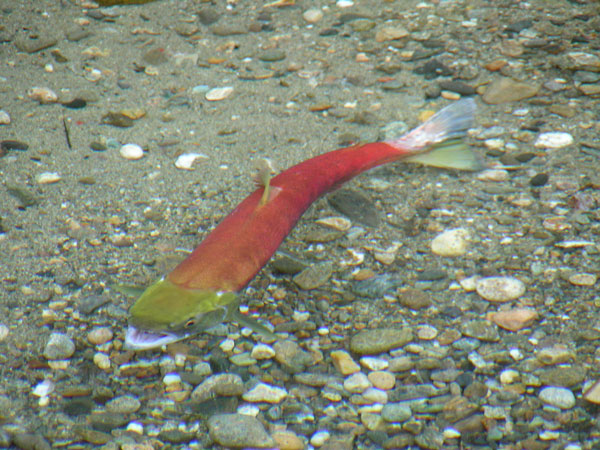
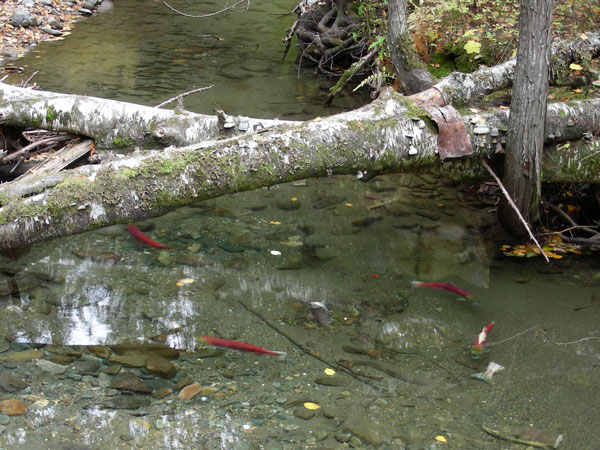
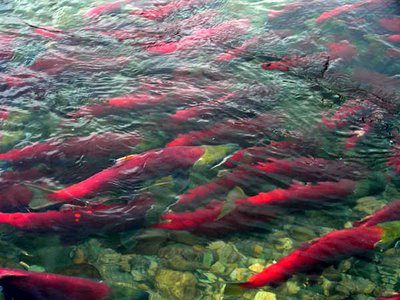
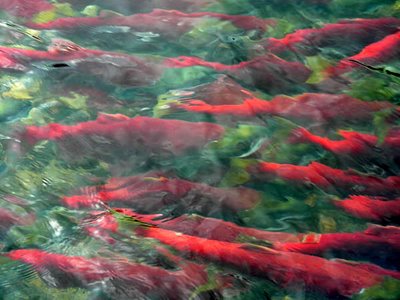
It's a spectacular wildlife viewing event, happening once every 4 years. You will see millions of bright fiery red salmon swimming upstream at the bottleneck of a small river, producing a carpet of red under the shallow water.
WHY IS IT SPECIAL?
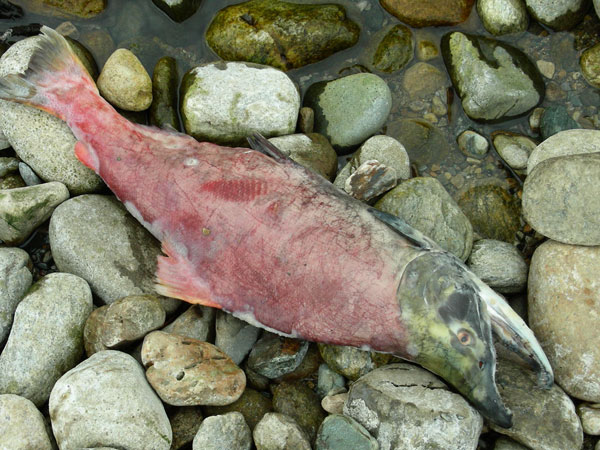
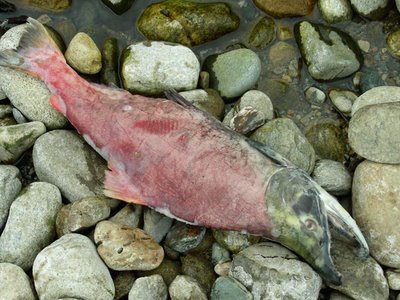
Imagine you're destined to die next month, but before you die must fulfill your life mission by battling hundreds of kilometres upstream through fierce rapids, waterfalls and predators to reach your ancestral home and spawn your offspring. Also you must complete this mission without any food until your death. You have a one-in-five chance of succeeding. Even if you succeed, you'll still die from diseases and parasites that will infest your battle wounds. And you'll die childless, while your eggs will hatch in a few more weeks to feast on the nutrients released from your decaying body. This is your fate, if you're an Adams River salmon.
WHERE IS IT?
Adams River is situated in the mountains of Western Canada, about 4.5 hours driving distance from Vancouver or 2.5 hours from Kelowna.
WHEN IS IT?
For the sockeye (red) salmon, the next dominant run (most visually impressive) will occur October 2010, followed by 2014, 2018 etc. A sub-dominant run (less impressive) will occur October 2007, 2011, 2015, 2019 etc. But the river is the spawning ground for many different species of salmon, so you'll see some returning salmon every year.
WHAT IS IT LIKE?
Ten thousand people from around the world will visit during a four week span. During our visit there were German TV and Italian TV crews, Japanese and Taiwanese tourists, and of course the Canadian government agencies and university researchers. It is NOT a quiet wildlife viewing trip - actually it's more like a 2000-people international convention of wildlife lovers and photographers.
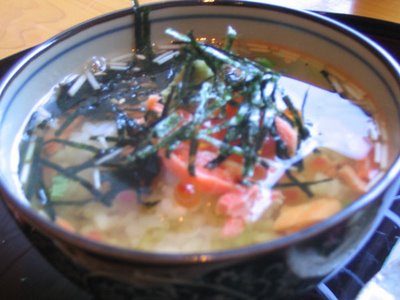
WHY DO YOU PUT THIS PAGE AMONG YOUR FOOD PICS???
Let's see, because I'm a big fan of sockeye salmon, and the wonderful flavor of its meat, its sweetness and its versatility to be served raw, cured or barbecued...oops bad joke...I better return to the topic of ecological tourism.
Perhaps you love photographing wildlife, or simply love to get in tune with Mother Nature, or just a backpacker looking for a cool reason to visit Canada. If you can schedule your Canadian trip to coincide with this rare event, you'll witness a very special display of courage, destiny, death and life.
-----------------------------------------
PRE-TRIP PLANNING
Visit the website of Adams River Salmon Society (http://www.salmonsociety.com) to confirm that there will be salmon for you to see during your visit. As described above, the next dominant run for the sockeye salmon will be in the autumn of 2010, most likely in October. If you cannot go in 2010, you may want to see the sub-dominant run of 2007 or 2011, and enjoy a much quieter visit. MOST IMPORTANTLY, if you go in a dominant year you'll want to avoid the Canadian Thanksgiving long weekend, if you don't fancy fighting for prime photo spots against thousands of fellow tourists.
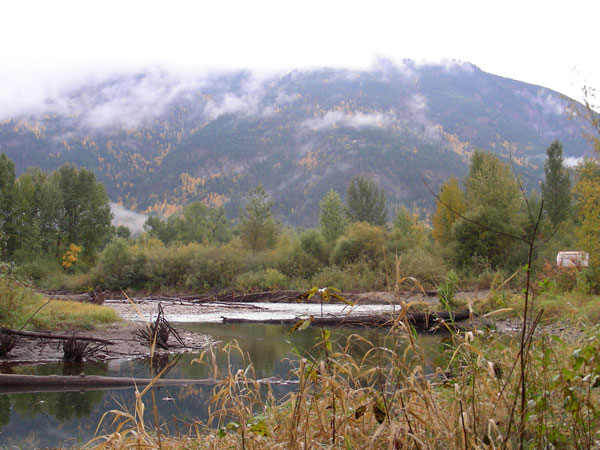
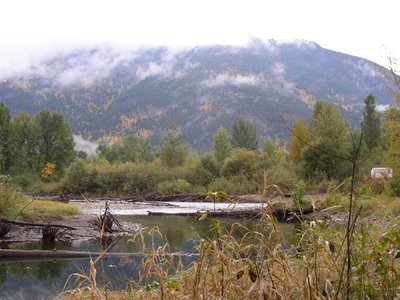
Autumn at Adams River. The final resting place of the spawning salmon, as well as the cradle of the young.
Transportation
Visiting Canada does not require a Visa for citizens of the USA, UK, Japan, most EU members, and many other countries. If you're unsure, check with Immigration Canada's website (http://www.cic.gc.ca/english/visit/visas.html).
The closest major airports to Adams River are Vancouver and Kelowna. Vancouver International Airport is the major gateway between Canada and the Pacific Rim and is served by many international airlines. Kelowna has a smaller airport designed mainly for regional air traffic. The driving time is roughly 4.5 hours from Vancouver, or 2.5 hours from Kelowna.
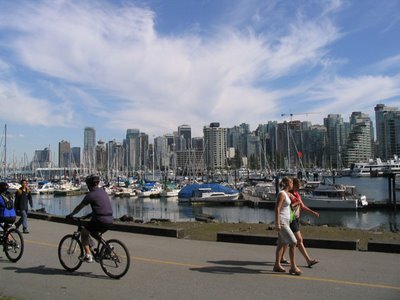
Vancouver is a pleasant city with mountains, coastlines, and great food. If you have time, I recommend flying to Vancouver and spend a couple days before driving to Adams River.
There is NO public transportation to the salmon viewing areas of Adams River, which means I would highly recommend visitors to either rent a car, or to join one of the local eco-tourism operators (See http://www.hellobc.com).
If you plan on hitch hiking, which I do NOT recommend, then you should at least book a room at one of the few hotels or bed-and-breakfasts in the immediate area and then try to hitch hike to and from the salmon viewing area. There are NO campgrounds within the Provincial Park where the salmon river is located. Bears roam the park at night so you don't want to camp there illegally. Greyhound bus (http://www.greyhound.ca) will get you from Vancouver or Kelowna to Chase, which is just a 10-minute drive from Adams River.
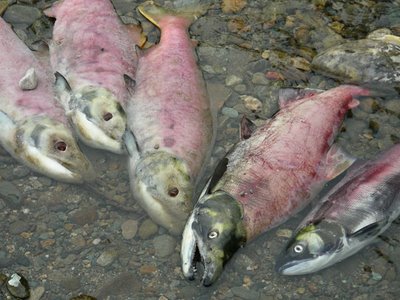
The smell of dying salmon attracts bears. Don't even think about camping here!
Accommodation
Accommodation is easy if you drive a car, as there are tens of hotels, motels and bed-and-breakfasts from Kamloops (45 minutes drive from Adams River) to Salmon Arm (also a 45 minutes drive, from the other direction). There are accommodations in the communities of Chase, Sorrento, and Squilax which are within a 15-minute radius. If you do not drive a car, as mentioned above you should try to book a room closer to the salmon viewing area, then perhaps you can beg (or bribe) someone at the hotel to give you a ride, or you may be able to hitch hike there. In any case, plan on paying CAD$70-$100 per night for a double room.
The following are some of the hotels and B&Bs in the nearby area:
Immediate Area (near Squilax)
http://www.quaaout.com/overview.htm
http://www.hiddenriver-bb.com/
http://www.jade-mountain-motel.com/
Chase
http://www.sunnyshuswapbb.com/
Sorrento
http://www.shuswapmaples.com/rates.htm
http://www.wsresort.com/2006_rates.htm
http://www.bbexpo.com/bc/evergreens.htm
http://www.shuswaplakemotel.com/
http://www.bbexpo.com/ingrids/default.html
http://www.bbexpo.com/bc/oreillys.htm
http://www.thimbleberrycottage.com/index.html
http://www.solitude.ca/RESVAT.HTM
Kamloops
http://kamloops.travel.bc.ca/
Salmon Arm
http://salmon-arm.travel.bc.ca/
What to Bring
Warm, water-repellant clothing is a must, as autumn in British Columbia is often rainy. Expect 0-10 degrees Celsius in the evenings and 10-20 degrees during daytime. Comfortable walking shoes are required since you will tread on park trails and rocky river banks. Water-proof hiking boots are even better.
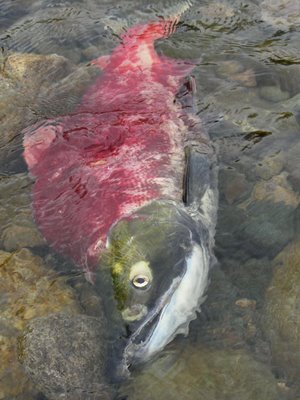
Bring good walking shoes or boots, as you will likely need to walk down the rocky river shore to take close pictures.
A polarizing filter is highly recommended (I regret not taking one from an obsolete SLR camera), whether or not you're a photographer. Even for viewing with naked eyes, a polarizing filter will tremendously help filter out the reflection at the water surface and let you see the salmon much more clearly.
---------------------------------------------
GETTING THERE
You will first want to visit to the official website of the Roderick Haig-Brown Provincial Park (http://www.env.gov.bc.ca/bcparks/explore/parkpgs/roderick.html).
If You Drive
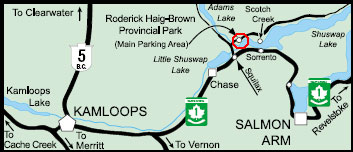
> From Vancouver - Take Highway No.1 to Hope (1.5 hours) and fill up on
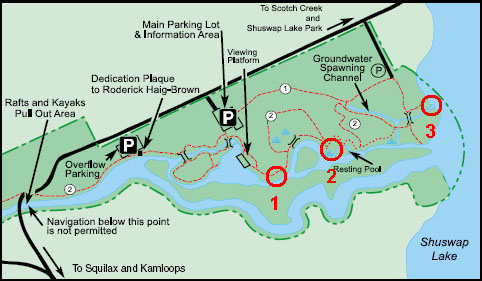
gasoline. Then you can choose to pay $10 to take the quicker (2 hours) Highway No.5, or to take the longer (3 hours) but more scenic Highway No.1. Either way you'll end up at Kamloops. At this point refer to MAP 1. From Kamloops, take Highway No.1 eastbound, past the town of Chase and start looking for the signs of "Roderick Haig-Brown Provincial Park", or "Squilax-Anglemont Road". At this point refer to MAP 2, follow the Squilax-Anglemont Road and the signs of the Provincial Park to get to one of the three parking lots of the salmon viewing area.
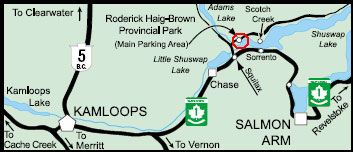
MAP 1: Highway Map
> From Kelowna - Take Highway 97 northbound towards Vernon. At Vernon take 97A
northbound, and then switch to 97B towards Salmon Arm. From Salmon Arm take Highway 1 westbound, past the town of Sorrento and start looking for the signs of "Roderick Haig-Brown Provincial Park", or "Squilax-Anglemont Road". At this point refer to MAP 2, follow the Squilax-Anglemont Road and the signs of the Provincial Park to get to one of the three parking lots of the salmon viewing area.
If You Take Public Transportation
> From Vancouver or Kelowna - Refer to the Greyhound bus schedule at
http://www.greyhound.ca. The nearest Greyhound bus stop is in the town of Chase. Greyhound buses from Vancouver to Chase usually run about three times a day, and buses from Kelowna to Chase depart at least once a day.
When you arrive at Chase, you'll have to rely on your hitch hiking and negotiation skills. Or spend money and call a taxi. Good luck.
-----------------------------------------------
WHERE TO VIEW THE SALMON
Most people first go to the "viewing platform", which offers a wheelchair-friendly spot for casual tourists to take a distant look at the salmon swimming 20 feet below. Turn left or right and walk along the trails, and you'll find many view points to look at the salmon swimming in the river below. But these are not the best places to take close looks or photos at the salmon.
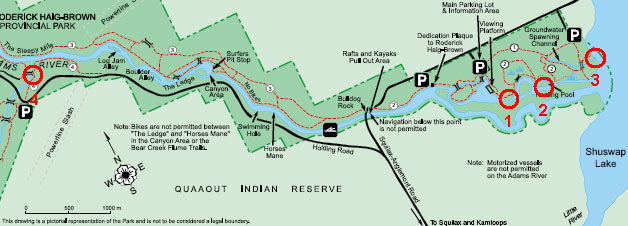
My favorite salmon viewing areas are outlined in these two maps.
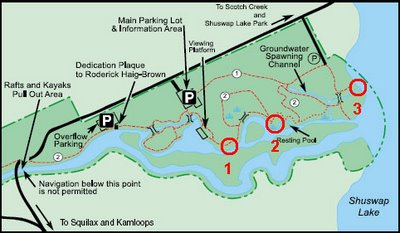
MAP 2: Large Park Map
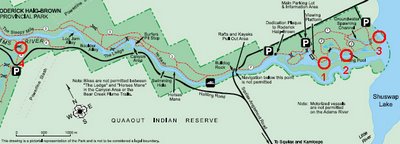
MAP 3: Detailed Park Map
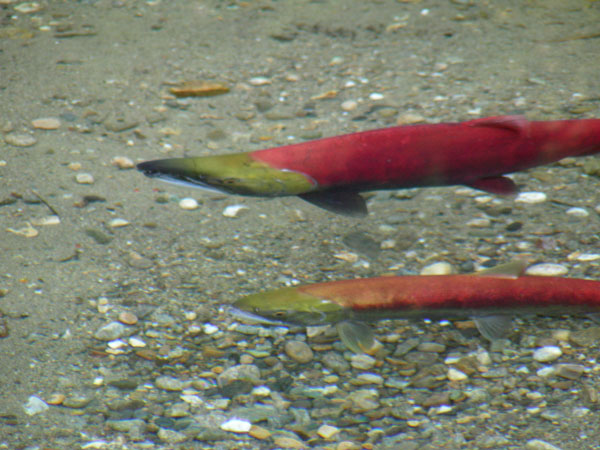
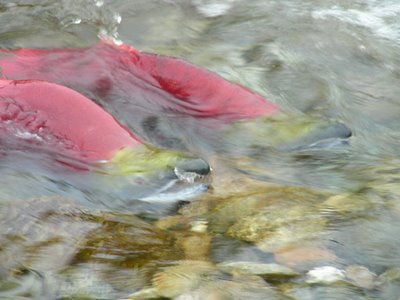
1) Walk towards the rocky river bank, where it is probably crowded with photographers already. This is the shallow, rocky section of the river where the river current is fastest and the salmon are fighting for their lives to hang on and not get swept down the river. A salmon would remain stationary within a group formation or behind rocks to conserve energy and wait for a chance to make a 50-metre sprint ahead, after which it will go into energy conservation again. This is how every successful salmon must proceed upstream during this treacherous section of the Adams River. This is a great place to take photos.
Two male salmon engaging the fight of their lives - not against each other but against mother nature. These two just finished their resting routine and are starting another short dash upstream.
A red carpet beneath the water surface. Don't be like me -- bring your polarizing filter.
2) Between the park trails and the rocky river bank, you'll find some quiet river channels protected from the rushing waters. If you're lucky, you'll find some salmon getting trapped in this area and getting ready to spawn. You'll see typical spawning behavior such as a female digging its spawning nest by thrashing its tail against the gravel bottom, and the males fighting for the right to mate with the female. I wasn't lucky enough to watch the actual spawning, but the foreplay was interesting.
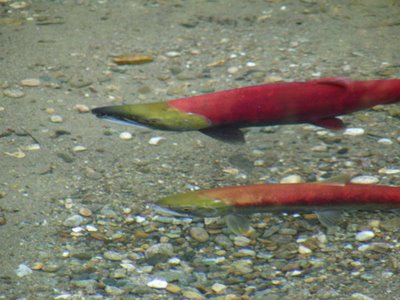
Male and female salmon in the spawning channel. This male was fending off two other males while the female kept busy digging her spawning nest.
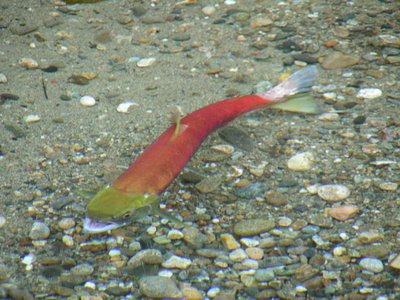
Note the battered tail of this dying mother. Her spawning nest would be built at the expense of her life, as she will likely die from the infections on her wounds.
3) Near the mouth of the Adams River (where the river empties into the Shuswap Lake), you'll find the highest concentration of salmon trying to swim into this bottleneck. You may see recreational scuba divers diving into the water to swim with the salmon. According to one of the divers, the river mouth is so crowded with fish that "you can't even move." If you can get a small boat or kayak, and an underwater camera, I imagine the scene would be quite amazing.
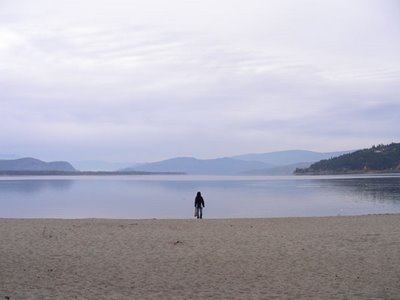
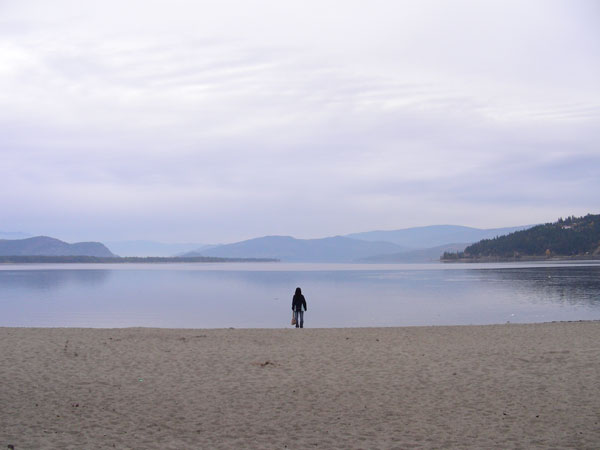
The deceivingly peaceful Shuswap Lake. Immediate to the right is the mouth of Adams River so hundreds of thousands of salmon are actually swimming beneath the surface, and can be often seen leaping out of the lake.
4) If you leave the popular parking lots and drive further upstream, you'll get to an area where there are trails leading to the upstream spawning grounds. This is another great place to see spawning salmon. But be warned that salmon attracts bears, so it would be a good idea to make noises and travel in groups on these less-popular trails. In fact, I actually saw a small cave beside the trail which might or might not be inhabited by a bear.
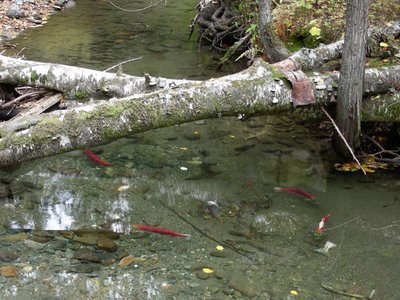
Pairs of salmon search for a nesting place at the upstream spawning ground, just a few steps from the cave. Note the salmon that had its tail cut off at the bottom right corner. This was actually the scientists counting the number of salmon that had successfully spawned and died.
Just a word of caution - bears have been seen to feast on the amazing supply of salmon in the park. Do NOT take walks in the park before dawn and after dark. As a local inn-owner advised me: Arrive after 9:00am, and leave the park before 6:00pm and you should be safe.