Pages

Friday, October 17, 2008

Kanazawa - Restaurants, Budget Hotel and Transportation

As promised in the previous article, here are the reviews of the restaurants we visited and the hotel we stayed in, for those who are seriously planning a trip to Kanazawa. As I mentioned, we had all our meals inside the 280-year-old Omicho Market, a mecca for seafood lovers.

Food Review: YAMASAN SUSHI (Omicho Market, Kanazawa)
Address: Kanazawa-shi, Shimo-Omicho 68
Hours: Daily 08:00-20:00
Website/Map: From Official Site
Directions: From Kanazawa Station, you can walk for 20 minutes or take a tourist bus to get to the Omicho Market. Yamasan Sushi is near the Northwest exit of the market ... everyone knows this place.
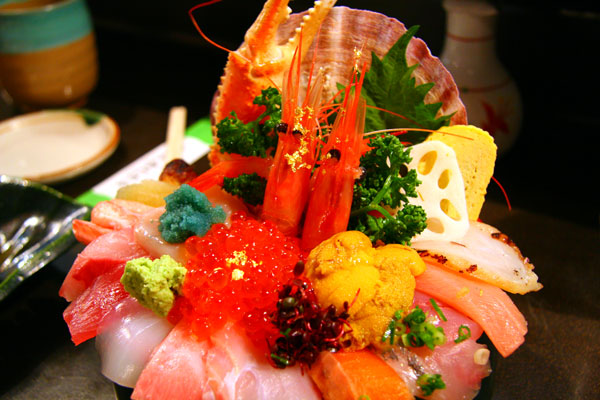

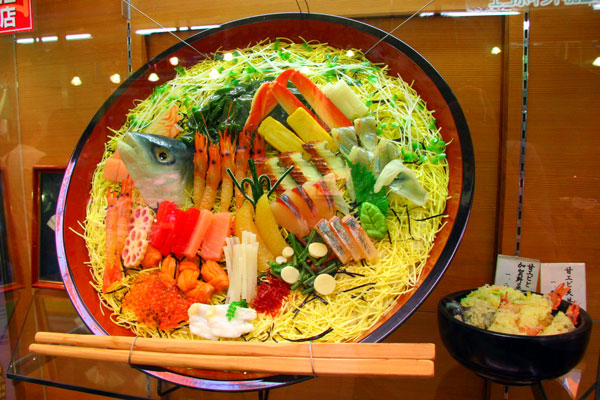
I'm a seafood fanatic, and inside this photo shows some of the freshest seafood I've ever had -- certainly the freshest Buri (yellowtail) and Snow Crab. Overall quality was at least as good as the internationally famous and incredibly popular Sushi Dai at Tokyo's Tsukiji Market, but without the two-hour lineup. The price was very reasonable for this top quality, as this 18-topping Kaisen-don set me back only 2625 yen (CAD$26). If I had to pick one Kanazawa restaurant to recommend, this is it -- the 60-year-old institution of Yamasan Sushi.
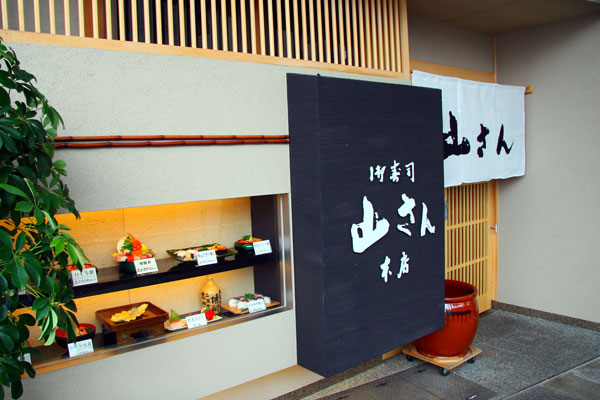


Located just inside the Omicho Market's Northwest Exit, Yamasan was one of the only eateries open early in the morning (08:00), and thus our natural choice for a filling sushi breakfast. It's your prototypical, traditional style Sushiya with two Chefs running the show behind the counter, a couple of Zashiki rooms on the side, and the Chefs' wives doing the kitchen work and the serving. The menu prices ranged from 1365 yen (CAD$14) for a Nigiri set to 2940 yen (CAD$30) for a Tokujo (Deluxe) Nigiri. And if you want your sushi in Chirashi style, an Omakase-Don was priced at 1575 yen, my Kaisen-don at 2625, and the top-of-the-line shucked Snow Crab or "Uni + Ikura" on rice cost 3150 yen (CAD$32).
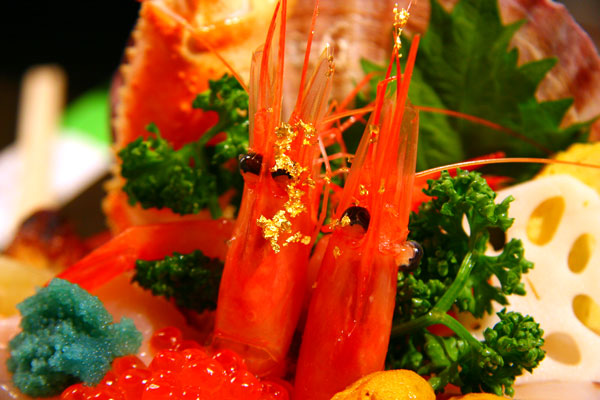


A closer look and you'll see an unmistakably Kanazawa touch in the presentation -- a sprinkling of gold leaf flakes on the centerpiece of the dish. The Amaebi was fresh as expected, but the Ikura, the Buri, the Chu-Toro, the Uni and the Kaibashira were just top notch. And last but not least, there's a whole, fresh Snow Crab pincher stuffed at the back of the bowl. To this day I still remember this as one of my three favorite crab dishes.
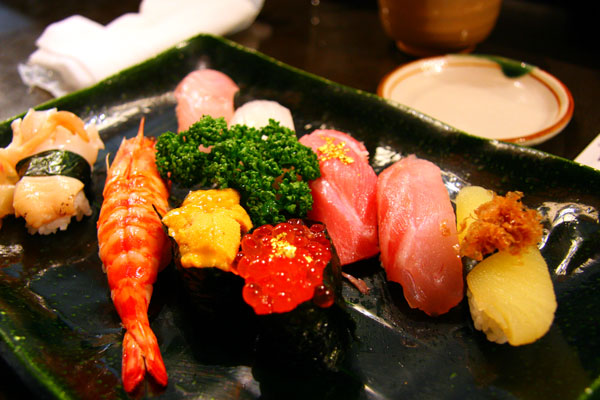


And my wife, being a light eater, ordered the 2940 yen (CAD$30) Tokujo Nigiri set. Again, note the light dusting of gold leaf flakes on the Ikura and the Otoro -- this seems to be the signature of Kanazawa restaurants wherever we go. I can't comment on the freshness, but according to my wife the Ikura and the Uni were the freshest she has ever had.

I must apologized that ... I forgot to photograph the MOST IMPORTANT PIECE of sushi in the Nigiri Set -- a whole half-shelled Snow Crab claw which my wife finished before I could grab the camera. But you get idea ... it was some of the freshest sushi money can buy, short of sitting aboard a fishing boat.

Bill for Two Persons
Kaisen Don2625 yen
Deluxe Nigiri-zushi2940 yen
TOTAL5565 yen (CAD$56)


Food Review: KAISENDON-YA (Omicho Market, Kanazawa)
Address: Kanazawa-shi, Jikken-machi 32
Hours: Daily 11:00-21:00; Closed Thursdays
Website/Map: From Yahoo Japan
Directions: From Kanazawa Station, you can walk for 20 minutes or take a tourist bus to get to the Omicho Market. Kaisendon-ya is located at the perimeter of the market's south end.
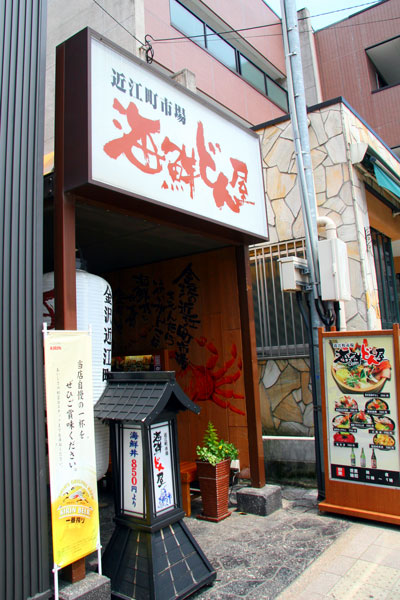

When a restaurant dares to name itself after a particular dish, typically I would expect something different about its interpretation of that dish, or perhaps simply superior in its ingredients or preparation method. In this case, the Kaisen-don is the cheap and common seafood ricebowl found at any fish market anywhere in Japan, so I had been anxious to come and evaluate the freshness of the Sushi Neta here after reading good reviews on TabeLog about this little joint just outside of the Omicho Market.

Even though there's no English menu outside, the colorful pictures and prices on the Japanese menu board is enough to tell you that this is a reasonably priced neighborhood place for seafood. And if you can read Japanese, you're probably already attracted by the sign that says "Kaisen-don from 850 yen" (CAD$8.5). Now that is an unbelievable price no matter where in Japan you are.
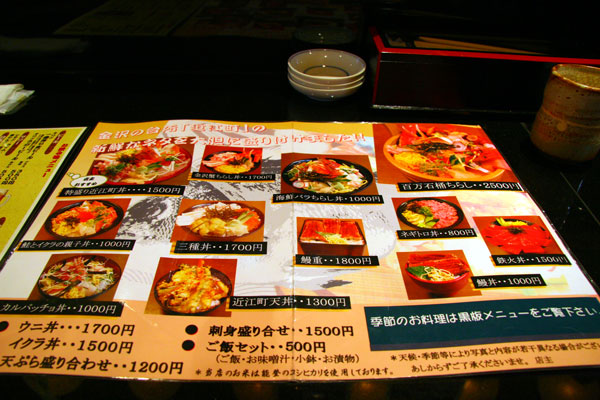


Here's the menu, no fancy Nigiri-zushi here, just seafood bowls of all types:

- Negitoro-don (chopped tuna and green onion) - 800 yen (CAD$8)
- Salmon and Ikura Oyako-don - 1000 yen (CAD$10)
- Carpaccio-don (thinly-sliced seafood) - 1000 yen
- Kaisen Bara Chirashi (mixed seafood) - 1000 yen
- Unagi-don - 1000 yen
- Omicho-Ten-don (Tempura) - 1300 yen (CAD$13)
- Tekka-don (Tuna) - 1500 yen (CAD$15)
- Large Omicho-don (variety of seafoods) - 1500 yen
- Sanshu-don (Uni, Ikura, Snow Crab) - 1700 yen (CAD$17)
- Kanazawa Crab Chirashi - 1700 yen
- And finally, the mother of all Kaisen-dons ... they've got a Kaisen-don in a bucket (called Hyakuman-goku Oke-chirashi) ... for 2500 yen (CAD$25)

Well, I figured we could afford to splurge at a cheap family-run place like this, and so we ordered two of the more expensive items.
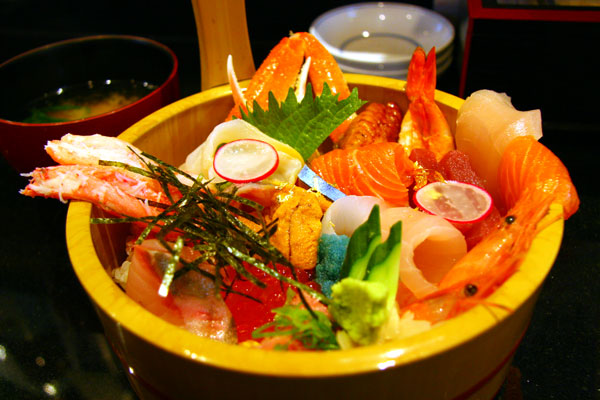


Here's the Oke-chirashi ... certainly the most impressive-looking ricebowl I've ever had ... though technically I'd have to call it a rice-bucket. It's not really as big as it sounds -- the container was similar to the type of hand-bucket you see at most Japanese public baths. The portions were somewhat larger compared to Yamasan Sushi, though the freshness was just a notch lower. It's still exceptionally fresh compared to most Kaisen-don places in other parts of Japan though, crowned by the excellent Uni and the local Snow Crab. And of course, it wouldn't be a Kanazawa style Kaisen-don without the dusting of gold leaf on the Uni.
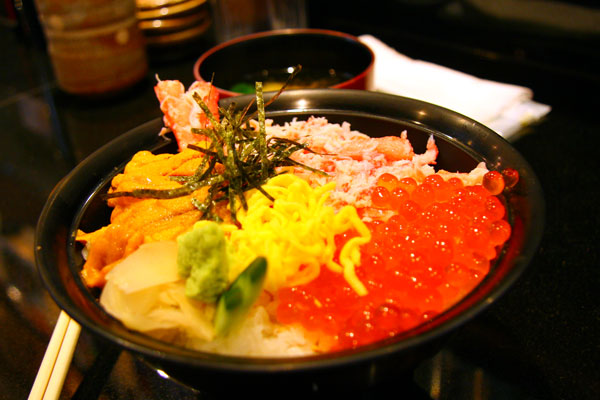


In retrospect I would have preferred my wife's Sanshu-don (3 types of seafood on rice), but I didn't expect the Uni and Snow Crab to be this good. The Ikura was also terrific, and this is according to my wife, who never orders Ikura outside of Japan.

So was it better than Yamasan Sushi? Not quite. But was it worth the money? Most definitely. Do I still recommend it? Yes, but only for the cheaper varieties of Kaisen-don. If you're planning to go for the bucket, I think Yamasan's Kaisen-don is a much better value at roughly the same price.

Bill for Two Persons
Hyakuman-goku Oke-chirashi2500 yen
Sanshu-don1700 yen
TOTAL4200 yen (CAD$42)


Food Review: OMICHO SHOKUDO (Omicho Market, Kanazawa)
Address: Kanazawa-shi, Aokusa-machi 1
Hours: Daily 10:30-15:00, 17:00-20:00
Website/Map: From Official Site
Directions: From Kanazawa Station, you can walk for 20 minutes or take a tourist bus to get to the Omicho Market. Omicho Shokudo is just inside the West Exit of the market.

The word Shokudo typically refers to a cafeteria or a canteen, and to market workers and lunch-seeking salarymen working in the neighborhood, this is THE place for fresh and inexpensive seafood. Whether you want your fish as sashimi, as shioyaki, simmered or baked, they've got it. In fact, in terms of quality vs price, this is probably one of the best places in Kanazawa.
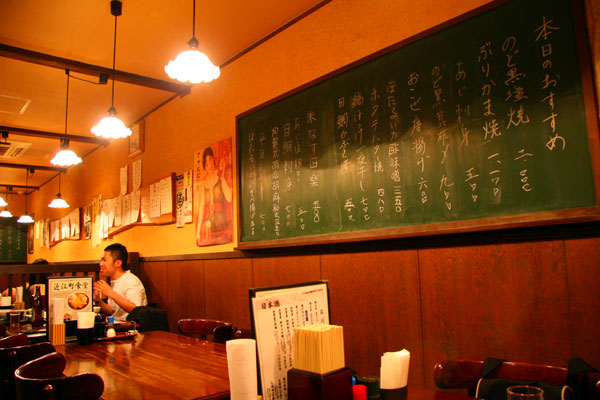


This is how it works ... you pick any entree -- starting from as little as 500 yen (CAD$5) -- and then add 400 yen for a dinner set with a Miso soup with clams, a Hiya-yakko tofu appetizer, two small vegetable dishes, and a bowl of rice. So we're talking a simple 6-course seafood dinner for 900 yen (CAD$9), quite a bargain no matter how you look at it.

As with most Shokudo type places, the daily menu is scribed on a chalk board -- in Japanese of course, but you could ask the waitress for a little translation. When we visited in May, the seasonal menu included:

- Scallops Butter-Yaki - 480 yen (CAD$5)
- Aji Sashimi - 500 yen
- Medai no Kabuto-ni (braised head of snapper) - 500 yen
- Okoze (stinger fish) Karaage - 600 yen
- Medai (snapper) Sashimi - 700 yen
- Hirame (sole) Sashimi - 700 yen
- Shiro-ebi (white shrimps) Sashimi - 900 yen
- Nodoguro Konbu-shime (blackthroat sea perch sashimi in seaweed) - 900 yen
- Buri Kamayaki (grilled yellowtail cheek) - 1100 yen
- Hotaru-Ika Su-miso (florescent squids in miso-vinaigrette) - 1250 yen
- Nodoguro Shioyaki (grilled blackthroat sea perch in sea salt) - 2000 yen (CAD$20)
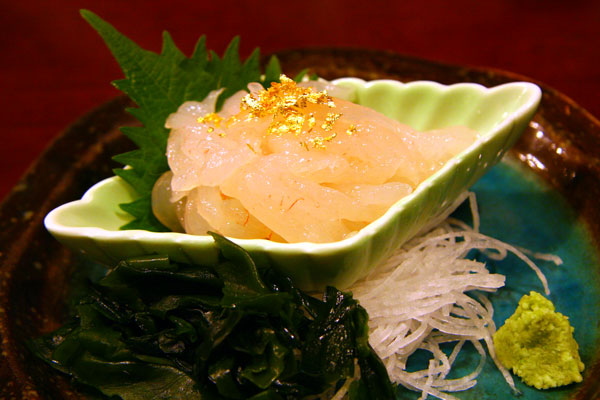


Well, you know where this is going -- we tend to splurge where we could afford to splurge -- and so the two of us ordered four entrees in total, including the 2000 yen Nodoguro fish I had heard so many good things about and just couldn't wait to try.

The shimmering Shiro-ebi Sashimi (900 yen) was the first to arrive. Although literally translated to simply "White Shrimp", the Shiro-ebi is a local specialty caught off the waters of Toyama Bay and seldom sold in restaurants outside of the Sea of Japan coast. We've had the fortune of sampling this incredibly sweet crustacean once in Tokyo, and on this trip to the producing-region it was one of the items we deliberately looked for.

Just look at that shine on the semi-transparent shrimp! If you ever end up on the Sea of Japan coast, do yourself a favor and ask for Shiro-ebi ... you'll thank me for it.
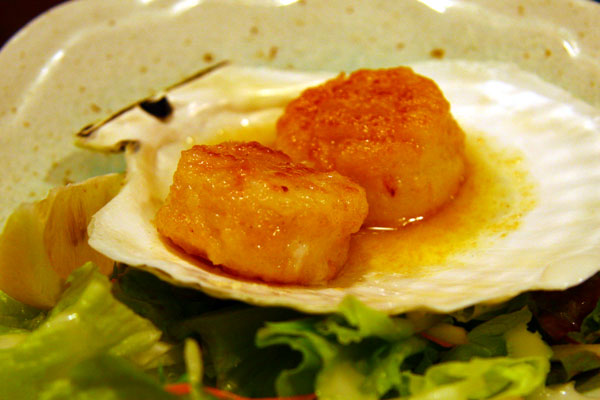


Next up was the Scallops Butter-Yaki (480 yen), lightly starched, baked in its own shell and served with a salad. The scallops were perfectly done, though the size was better suited as a appetizer than an entree.
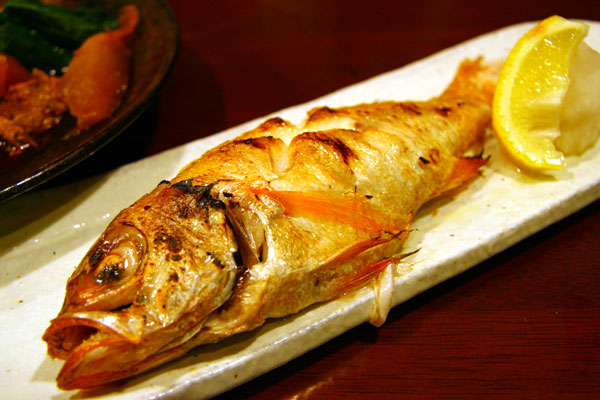


Here comes the Nodoguro we've been waiting for -- a smaller fish than I anticipated for its price (2000 yen). The meat had a silken, oily texture ... the best comparison I can think of is the oiliness of Chilean sea bass with the softness of a flounder. Sorry if I'm a little vague, but I've never had any fish like it. With a delicate fish like this the sea salt and a quick squeeze of lemon made the perfect seasoning, and it was so well-grilled that I even finished the crispy fins and tails. Was it worth it? Definitely. Would I order it again next time? Tough question ... Kanazawa has so many other famous dishes awaiting the adventurous ...
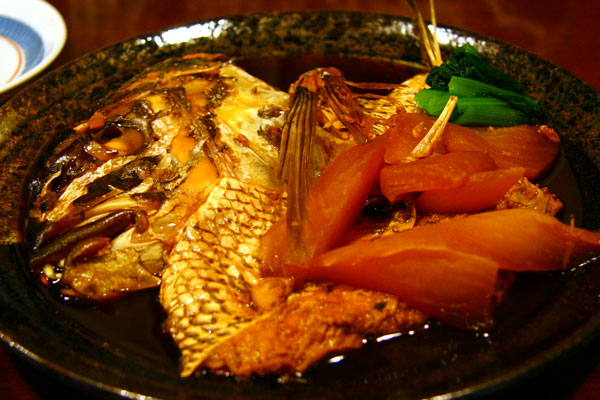


The final entree dish was the Madai no Kabuto-ni (600 yen), a whole snapper head simmered in a mirin and soy-based sauce, and served with your typical daikon radishes. The fish was fresh but overcooked, and the quality was just way below the other dishes.
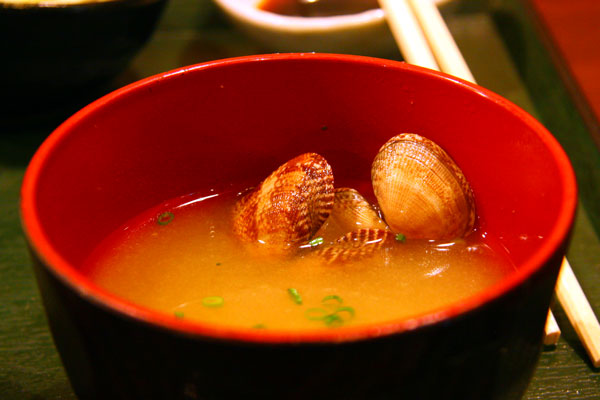


We couldn't resist also ordering the 400 yen dinner course -- how could we turn down five courses for 400 yen? Just this Asari-Miso soup is worth 400 yen at some higher end sushi places.

So which were the best dishes? The Shiro-ebi and Nodoguro were definitely the stars of the meal (and appropriately priced for their excellence too). The Asari-Miso soup was also very good. We wouldn't mind coming back for dinner, if we ever end up in Kanazawa again.

Bill for Two Persons
Shiro-ebi Sashimi900 yen
Nodoguro Yaki2000 yen
Scallops Butter-Yaki480 yen
Madai no Kabuto-ni600 yen
Dinner Sets x 2400 yen
TOTAL4780 yen (CAD$48)


Hotel Review: CITY INN KOBAYASHI (Kanazawa)
Address: Kanazawa-shi Tamagawa-machi 11-1
Price: 6000 yen for a Japanese-style double room with private bathroom
Website/Map: http://www.yadotime.jp/shisetsu/28/index.php
How To Book: You get the 6000 yen price only if you book through JALAN.net, which is for Japanese-readers only. If you can't read Japanese, email them at cityinn@spacelan.ne.jp and expect to pay 7000 yen for a double room.
Directions: From the Kanazawa Station, it's easiest to: A) walk for 15 minutes, or B) take the FLAT BUS KONOHANA (costs only 100 yen) and get off at Musashi-ga-Tsuji.
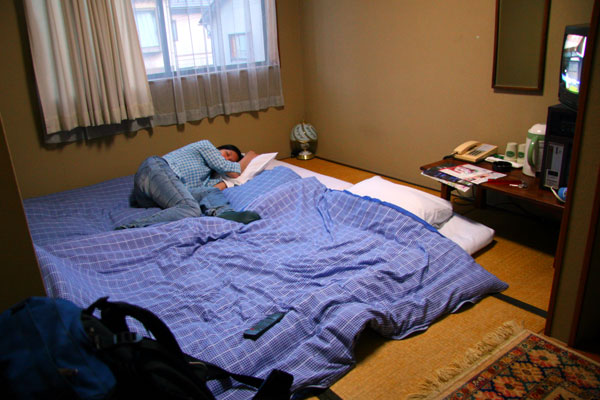

I think this is probably the first ever English review on this simple budget hotel, as I tried to search for English reviews myself prior to booking this place, but couldn't find any and ended up finding tons of reviews at Japanese sites.

You can see it all in this picture: a character-less but clean 6-Tatami Room sleeping two people, a little coin-op TV, air-con, cheap Futon mattresses and blankets, but at a rock bottom cheap price too -- a measly 6000 yen (CAD$60) for a double room with private bathroom at the heart of Kanazawa. Exactly what you'd expect from a no-nonsense business hotel anywhere in Japan.

City Inn Kobayashi is housed in its own three-storey building located near the Musashi-ga-Tsuji intersection at the centre of Kanazawa's urban core. A 10 minute's walk to the Northwest brings you to the JR train station; the shopping district of Korinbo is 15 minutes to the south; and most importantly for us, it's just 3 minutes walk away from the Omicho Market for the freshest seafood. Bus stops for both the LOOP BUS and the FLAT BUS are just a few minute's walk away, so it's also very convenient to reach all the main tourist attractions. And since central Kanazawa isn't really that big, a 20 minute walk would bring you to the front gate of Kanazawa's number one attraction -- the Kenroku-en.
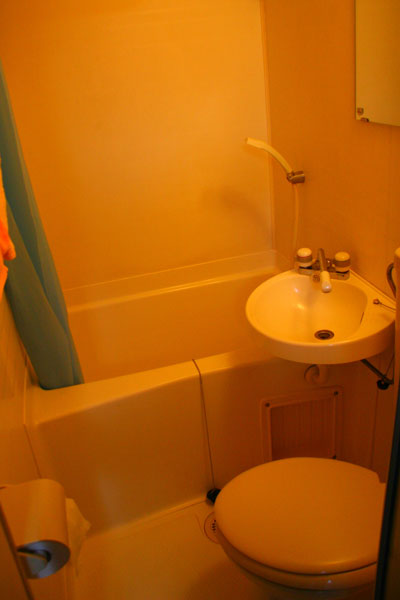


Like most family-run business hotels, its main clientelle are salaryman-workers and budget-conscious young Japanese travelers. The friendly, 50-ish-year-old owner didn't seem to speak any English, but knew exactly what we needed when he took in our backpacks when we arrived at 11:00, four hours before the check-in time. When we returned after a long day of sightseeing, our backpacks were waiting for us in our own room -- just what you'd expect from higher-priced hotels and Ryokans. Do note that they impose a curfew at midnight, so make sure not to get too drunk at the neighborhood Izakaya.


TRANSPORTATION
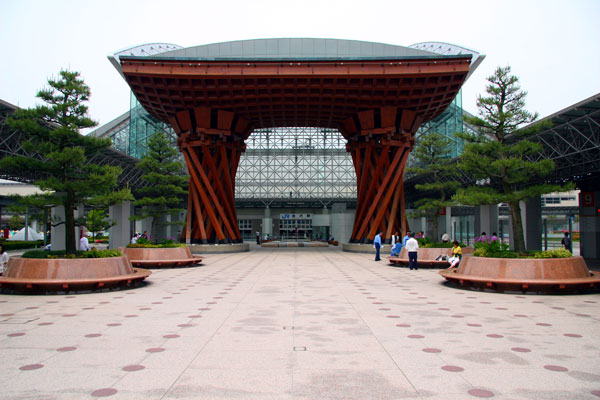

Kanazawa is a major train station on the western coast of Japan, just 2 hours away from Kyoto by Express train (nicknamed "Thunderbird"). If you come from Tokyo, the quickest way is to take the Shinkansen train to Echigo-Yuzawa, then transfer to an Express train to Kanazawa, taking a little over 4 hours in total. If you want to save on hotel costs, there's also an overnight bus leaving around 23:30 from Shinjuku Station and arriving at 08:00 at Kanazawa for only 4100 yen. Check out http://www.123bus.net/ if that's your preference.
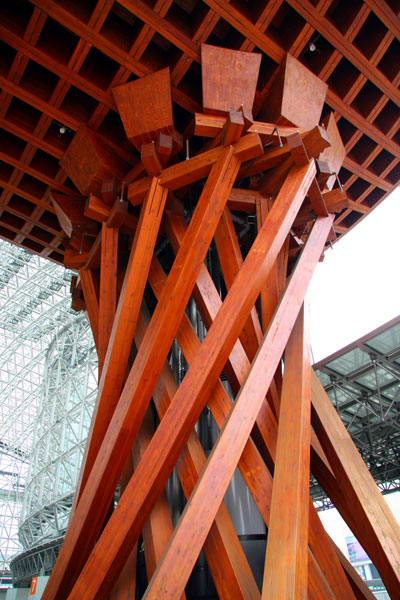


Once arriving at Kanazawa Station you'll see these huge wooden spindles outside the station. Besides being a symbol of the city's modernization, they also conveniently mark the location of the main bus station for self-serving tourists like us. With the areas of major tourist interest scattered on the outskirts of the old castle grounds, the several tourist-focused bus route are probably the best way to cover the sights in a time and stamina-efficient manner.
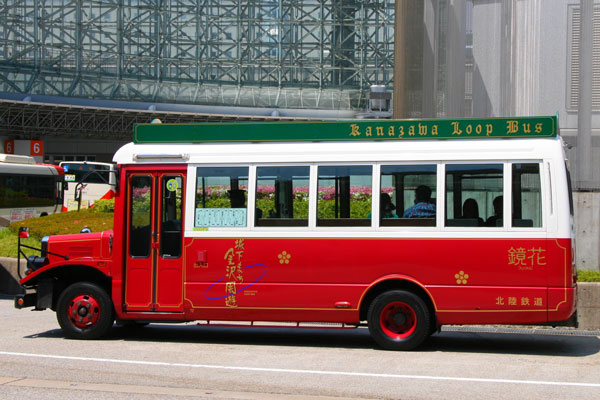


The easiest way is the LOOP BUS (also see official site in Japanese), which departs from the Kanazawa Station at 12 minute intervals from 08:36 to 18:00, snakes around most of the major sights and back to Kanazawa Station in 40 minutes. Major stops of interest include:

- Baba Jido Koen (1 minute walk to Hakuza)
- Hashiba-cho 4 (2 minute walk to Higashi Chayagai)
- Kenroku-en Shita (just outside Kenroku-en garden)
- Korinbo 7 (2 minute walk to Nagamachi Samurai District)
- Musashi-ga-Tsuji (1 minute walk to Omicho Market)

A single trip costs 200 yen (CAD$2), so the 500 yen (CAD$5) Day Pass probably makes more sense for most tourists.
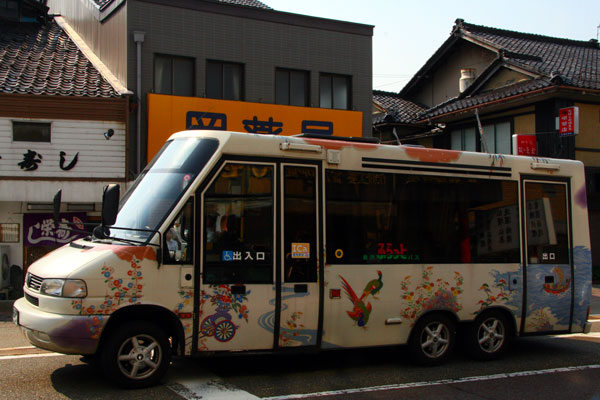


But we didn't take the Loop Bus -- there's another alternative called the FLAT BUS, which has three different routes going around different parts of the city for 100 yen (CAD$1) a trip. The Official Kanazawa Tourism Site has a fairly good explanation of these routes.


MY WIFE'S CORNER
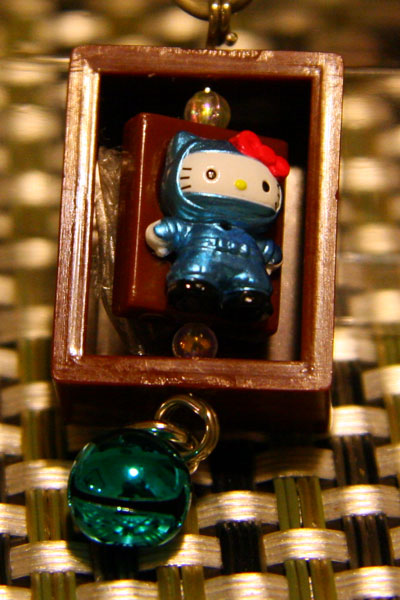

One of Kanazawa's famous attractions is the Myoritsu-ji, also known as the Ninja Temple for its unusual architectural features associated with Ninja activity. This Hello Kitty cellphone pendant is called the Kanazawa Ninja-Yashiki Edition. Kitty is dressed in a Ninja suit and hidden behind the revolving door. It was bought just outside of the Kenroku-en for about 450 yen.

Tuesday, October 7, 2008

Kanazawa - the Beauty of Japan's Other Side


Most first-time tourists consider Tokyo and Kyoto as top destinations, at the expense of the unfairly underrated Central Japan. So this article will the first of a series on my favorite region in Japan, so beautiful and culturally interesting, yet sadly missed by most Western tourists. I'll start with one of the most overlooked destinations of this overlooked region -- with the old castle town of Kanazawa.

Kanazawa is an old provincial capital on the sparsely populated Sea of Japan coast, which faces the Korean Peninsula as opposed to facing the Pacific Ocean like Tokyo and Osaka. Its two-hour distance from the Shinkansen (bullet train) line keeps Kanazawa relatively unknown to most Westerners, but to the Japanese it is one of the top domestic destinations, famous for a wide variety of touristic appeals -- well-preserved Edo-period townscapes, one of the countries' most famous landscape gardens, traditional gold-leaf production, and my favorite of all, incredible seafood.


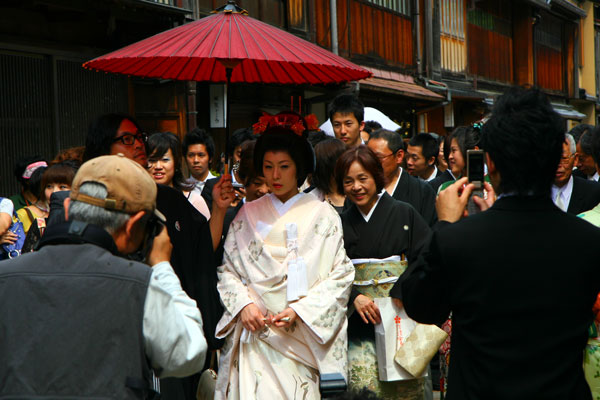
If you're wondering what was happening in the picture at the top, we visited Kanazawa's famous Geisha quarter of Higashi-Chayagai on a Sunday and came across one of the most picturesque weddings I've ever seen -- a lovely couple dressed in traditional gowns, being wedded in the most romantic of places. It was quite a spectacle even to the Japanese, and some of the excited female bystanders rushed to shake hands with the bride and to offer congratulatory greetings. The *entire* neighborhood came out to take pictures, much to the annoyance of the bride I think.


The word "Chaya" (teahouse) in Higashi-Chayagai was an euphemism for brothel back in the old days, so the selling point here was never about tea. Even today a few real Geisha houses remain along the banks of the Asano River, though the most famous, Ochaya Shima, has been declared a National Important Cultural Asset and turned into a little museum. Most of the other traditional houses now operate as upscale restaurants or flagship stores for Kanazawa's historical handicraft industries.

The neighborhood still retains much of the feudal atmosphere, with kimono-clad ladies walking alongside the traditional two-storey Machiya townhouses. Compared with the internationally famous Kyoto, domestic tourists make up most of the visitors here, and it will probably remain so until the planned Hokuriku Shinkansen Line provides direct bullet train connection between Tokyo and Kanazawa in 2014.


And if you want to enjoy this traditional beauty without any tourist crowds, there is another lesser known but equally charming "Chayagai" area just 5 minutes walk to the South, along the other bank of the Asano River. IMHO the Kazue-machi Chayagai preserves the authentic atmosphere even better than Higashi-Chayagai, with less commercial activity, a couple of Ryokans you can stay in, and most importantly an entire row of Sakura trees going into full bloom every spring.

On this day we spotted this Shamisen-playing lady coming out of one of the Machiya townhouses. An instructor to the Geishas? Or perhaps a former Geisha herself? Sadly we'll never know, but that's also part of the Geisha quarter's attractive mystique.


Surprises await at every street corner and back alley, so visually stunning that one may be forgiven for mistaking it for Kyoto. But in reality you can hardly take an unobstructed photo at Kyoto's tourist districts nowadays, so in some cases Kanazawa could be said to match the casual tourist's expectations better than Kyoto itself.


For any camera-toting tourist, it's simply impossible to come back without good pictures at a place like this. If you need more reasons to visit, yes this stunning but nameless shrine was also part of Kazue-machi Chayagai.

I should mention that there's a third Chayagai in Kanazawa, located southwest of the Korinbo commercial district, which we never visited. It was just a little too far from our planned route.


Visiting Kanazawa's famous Chayagai and Garden are fine for casual tourists, but if you want to delve a little deeper and do what the locals do, then you need to understand Kanazawa's importance as the capital of the traditional gold-leaf production industry. In fact Kanazawa is estimated to produce 98% of Japan's gold-leaves, including those used to cover Kyoto's Golden Pavilion. So any Japanese tourist visiting Kanazawa arrives with expectation from friends and coworkers that he will come home with some sort of gold-leaf handicraft items as Omiyage.

Gold-leaf covered souvenirs aren't as expensive as one may think, often starting from as low as 800 yen (CAD$8) or so for a little pendant. And even if you have no plan to shop, the gold-leaf factory and showroom is quite an interesting place to visit. If you're visiting Higashi-Chayagai anyway, the headquarters of gold-leaf production giant Hakuza (http://www.hakuza.co.jp/english) is only a few minute's walk to the North.


By far the most impressive sight at Hakuza is a modern reproduction of 16th Century Shogun Hideyoshi's "Golden Tea Ceremony Room". This picture doesn't do any justice to the excess grandiose of the small but incredibly lustrous room -- if 50 Cent is your definition of bling, you should really see this place.


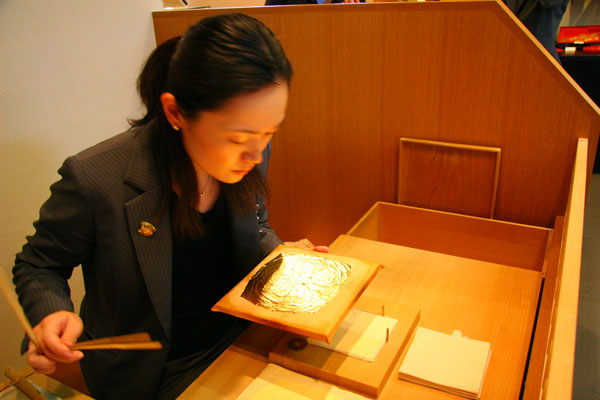
Even though we dressed like the poor backpackers we were, it didn't stop the manager from putting on her best demonstration of gold-leaf production just for the two of us. First she took one incredibly thin sheet out of a stack of gold sheets using a bamboo tweezer.


Placing the gold sheet on a thin leather cushion, she then spread open the sheet with just a soft blow of her breath.


The gold sheet was then trimmed according to a standard-sized piece of pounding paper. The trimmed sheet was then stored inside a sheet stack, with each sheet individually separated by a piece of pounding paper.


What happens to the unwanted edges? Most goes back to the pounding room to be recycled into fresh sheets, but a few squares end up on the hands of inquisitive tourists like ourselves. We had no idea what to do with them, before the staff told to apply the gold to our faces as a facial treatment. Weird.


The service here was of course living up to the legendary Japanese quality one would expect, with complimentary tea and dessert covered with ... what else ... gold leaves and gold flakes. Being educated in the Western world I'm naturally skeptical of heavy metal ingestion, but here in Kanazawa they lavishly decorate any higher priced dishes with gold flakes, as you'll see in the food pictures in the next article.


There's no obligations to buy anything, but we did come away with this little gold leaf coated owl, at a reasonably price of 1050 yen (CAD$10). But the best bargain by far was two small bag of transparent, gold-leaf-infused hard candies for 578 yen (CAD$6) each, a unique and exotic present appearing several times its price and absolutely amazed my wife's coworkers.


But the ONE tourist attraction everyone comes to see is the 230-year-old Kenrokuen, one of the "Three Famous Gardens" of Japan and THE symbol of Kanazawa. This two-legged lantern is probably the most overused image featuring on every tourist brochure, followed by the snow-covered image of a conical array of ropes attached to the Karasaki pine tree for achieving even distribution of snow fall.


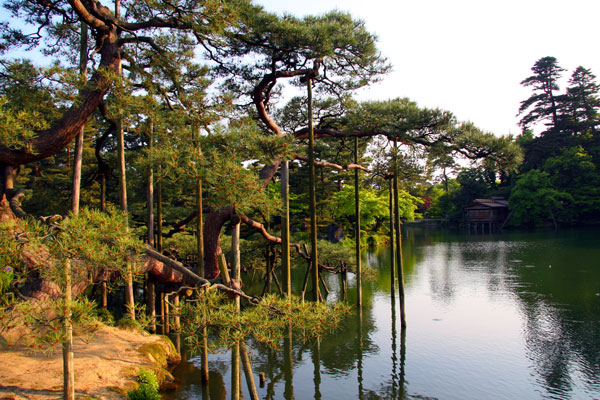
No intricate rope arrays could be found during our summer visit, but the famous pine tree still gracefully postured on the lakeside with the help of the supportive pillars. The garden also features Japan's first gravity-powered water fountain, a 200-plus-year-old tea pavilion, beautiful plum blossoms in springtime and autumn foliage. Personally I don't consider Kenrokuen to be Kanazawa's primary attraction the way it's often advertised, but with the wide array of quality attractions in the city, it doesn't need to be.


On the other side of the castle grounds lies the Nagamachi Samurai District with its centuries-old earthen walls and narrow lanes -- middle-class feudal architecture at its purest. A couple of the best-preserved Samurai houses have been converted into museums, and a few others into pottery and silk-dyeing workshops. It's really the most charming of places for a quiet romantic stroll.

There are so many places worth visiting in this little city that we didn't even have time for a few fairly famous attractions -- the Myoritsu-ji (more popularly known as the Ninja Temple), Nishi-Chayagai Geisha Quarters, and the grounds of the Kanazawa Castle Park would all make great outings, should we had stayed for a couple more days.

But even if we had to miss all of the above attractions, there's ONE THING we would never miss on any visit to Kanazawa ... the incredibly fresh seafood at the historical Omicho Market.


Many sushi connoiseurs hail Tokyo's Tsukiji Market as the Mecca of fresh sushi, and with good reasons (see our visit from 3 years ago). But where does the fish in Tsukiji come from? A good portion actually comes from the Sea of Japan fisheries off the coast of Kanazawa, so at least theoretically the seafood here should be as least as fresh as Tsukiji's. Being hopeless seafood lovers ourselves, we went to Kanazawa's 280-year-old Omicho Market to test out this theory.


Hokkaido has its famous sea urchins, Ise hails its lobsters, but in Kanazawa, the Zuwaigani (snow crabs) rules as the undisputed King of Seafood, shown here priced from 3500 to 6000 yen (CAD$35-$60) each. If you think $60 is a steep price for one crab, it would have been twice that price had we arrived during the winter crab season. But mid May wasn't a bad time for a visit since it was the best season for other delicacies...


...such as the egg-carrying Hotaru Ika (fluorescent squid), which has become my wife's favorite seasonal seafood on this trip. But in addition to being delicately steamed and served fresh in restaurants, here in Kanazawa they're also sun-dried, sold as street snacks, and eaten in an authentically local and strange manner -- the vendor lady taught us to use a cigarette lighter, quickly char the skin of the squid, then pop it whole in one bite -- tentacles, roes and all.

Fascinating place isn't it? That's why we had all our breakfast, lunch and dinner inside the Omicho Market during our stay in Kanazawa. If you're seafood lovers like us, there's no better place. In fact we have so many food pics from Kanazawa that I'm going to move them to the next article ... sorry, I'll post them next week.

Wednesday, September 24, 2008

The Ultimate Kyoto Experience -- Renting the Eco-House Machiya


Some travelers can't do without the familiar comfort of four star Western hotels wherever they go, while another type of travelers strive for farmhouse villas in Tuscany or cave dwellings in Cappadocia. If you consider yourself among the latter, then you may well consider renting yourself a traditional Machiya (Japanese Townhouse) when you travel to Kyoto.

What's so special about staying in a Machiya? A Machiya is a prototypical Japanese wooden dwelling typified by a raised Tatami-mat floor suspended in mid-air, with sliding Shoji room-dividers inside, and intricate wooden lattice windows and doors at the exterior. Greatly reduced in number by fire and redevelopment over the past decades, by year 2006 the number of Machiya's remaining within the City of Kyoto had dwindled down to 24000. If you're an adventurous cultural tourist, now is a good time to sample this gradually vanishing traditional way of life.


Kyoto Eco-House Machiya is a pilot project run by a grass-root, non-profit group of volunteers to raise awareness for the preservation and revitalization of the city's traditional townhouses. Since July 2000 it's been welcoming artists looking for inspiration and travelers yearning for the most authentic lodging, right at the centre of Kyoto.

It is NOT designed to be a tourist's rental apartment -- instead it's meant to provide an authentic exposure for anyone wishing to experience life in a Machiya as a resident of the old Kyoto. IF YOU'RE A CLEAN FREAK, YOU CAN STOP READING NOW. But for adventurous tourists, there's no better way to live and breathe-in the ancient capital -- authentic Japanese architecture, conveniently located at 5-minute walking distance from a subway and JR train station, and costing less than 5000 yen (CAD$50) per night for two people.


So how does the rental process work? The simplest way is to go to their official webpage, read their English instructions, then fill in their inquiry/email form. It's a volunteer organization after all, so expect long delays on replies (a few weeks is not unusual, based on my experience). And at its incredibly cheap rental price, also expect it to be fully booked a few months ahead, especially during the summer and Autumn high seasons.

After confirming that our desired dates were available, we then agreed on a time to meet. At our proposed meeting time arrived the friendly Sano-san (so friendly that later he went totally out of the way and drove us 20 minutes to our next sightseeing spot). Upon arrival we were given a tour of the house, instructions on using the facilities (Air-con and Kotatsu!), and an extremely detailed English User's Guide written by a former occupant (see pictures below). We received one set of keys, which we simply dropped off at a certain secret location upon checkout. For the next few days, the Machiya, and thus this incredibly foreign and yet familiar way of life, was entirely our own to explore.


Kyoto Eco-House Machiya from the outside -- a beautifully aged, authentic little Machiya in the classical Kyoto peasantry tradition. The bright signages ("Mitsubishi Radio Television" and "National Lamp"!) brings a certain nostalgic 1950's look to the house, and the stone Tanuki statue at the front dates from the Meiji Era (at least a century old) according to Sano-san. Of course there's also the quintessential feature of all Japanese townhouses -- a wooden Koshi lattice, this one colored in the traditional ocher red. It may look slightly dilapidating, but that's also part of the charm.

Note the bottom edge of the lattice outside is also the base of the Tatami flooring inside. The wooden structure is suspended atop a few independent pieces of foundation stones, with wooden beams placed horizontally on the stones to act as the house's bottom frame. Tatami flooring and room dividers subsequently go on top, and the end result is the typical Machiya structure with a tatami-mat floor suspending in mid air, which is critical for the purpose of improving air-flow and preventing wood decay in Japan's humid summertime.


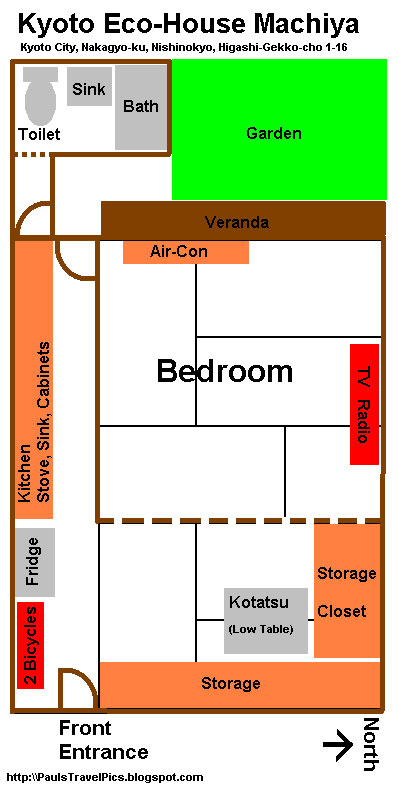
Here's what I remember of the floor plan, for those of you seriously considering renting the Machiya for your vacation. This is what the Japanese call a "2K" (two rooms plus a kitchen) floor plan, with the main room measuring 4.5 Tatami-mats and comfortably sleeping two people. Japanese household necessities are basically all included -- a fully functional kitchen, western-style toilet and bath, air-conditioner, TV and radio, a garden veranda for those starry nights, and a Kotatsu (low table with heater) to huddle on a cold winter morning.


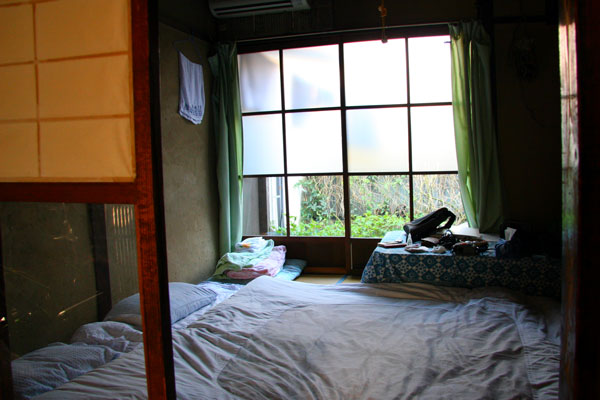
The bedroom is basic but well-equipped with an air-conditioner and a TV, and of course the quintessential Japanese sliding doors opening out to the garden. Pillows, blankets and futon mattresses are all provided, stored away in the storage closet in the daytime. The 4.5 Tatami-mat size is enough to lay out beddings for two people plus some extra space for the low table.


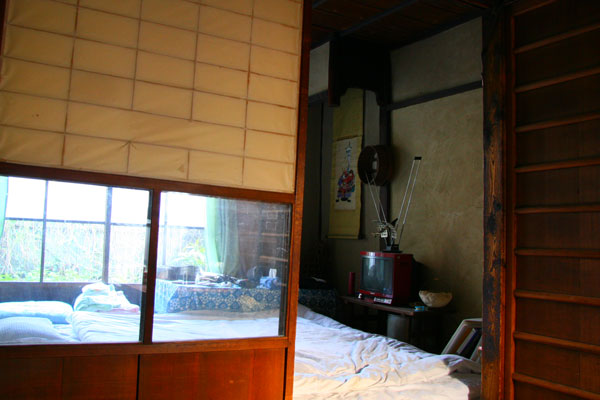
A typical Fusama sliding door separates the bedroom from the front room known as Mise, which in the old days could be used as a store-front. Everything in the room is as authentically Japanese as it gets -- an antenna TV from the 80's, an alcove with a hanging picture, and earthen walls coated with a mud-and-straw plaster mixture.


The closets and cabinets of the Mise room provides the Machiya with some much needed storage space. At the bottom left of the picture sits the Kotatsu, a blanket-covered wooden table with a built-in heater, which we didn't use since we stayed during the summer. This is where we always had our home-cooked breakfast before heading out to explore Kyoto.


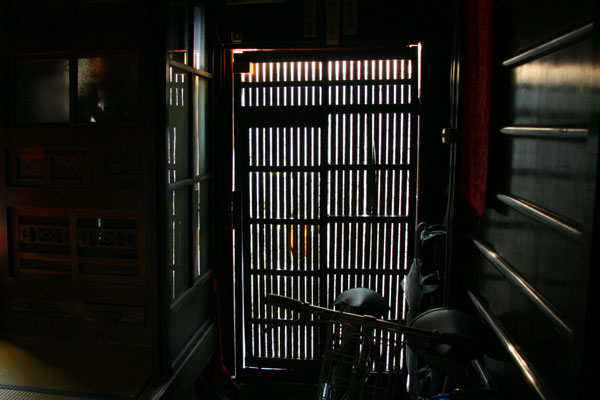
A classic scene in any Japanese townhouse, with the wooden lattice door providing a beautiful balance of light and shadow. Also note a valuable tool for this Machiya's occupants in the foreground -- a couple of old but perfectly working bicycles for exploring the neighborhood and bringing back groceries. Once you learn your way around the block on a bike, you're now fully immersed into the Japanese lifestyle.


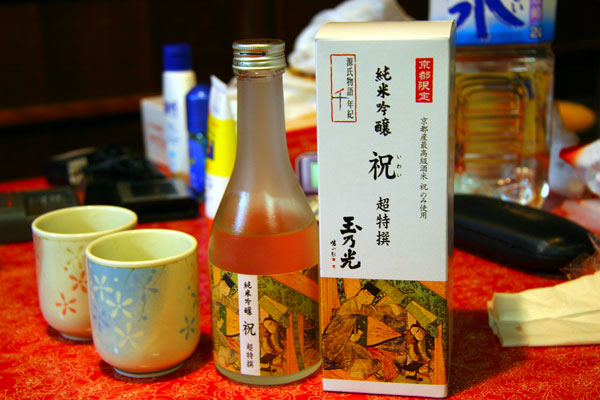
A small fridge sits outside the kitchen -- not a full-size family fridge, but perfect for breakfast meats, juices and chilling Sake.

The builder of this house followed a typical Machiya floorplan know as Unagi-no-Nedoko (Eel's Bed), aptly nicknamed for its narrow width and relatively longer depth. In the old days the government collected property taxes based on the frontage of the house, so this type of layout grew in popularity as a simple matter of tax avoidance.


While the entire right side of the house had the Tatami-mat covering a raised floor, the left side contained a narrow strip of unfloored space known as the Doma, stretching from the front entrance space (Genkan) through the kitchen to the garden at the back.

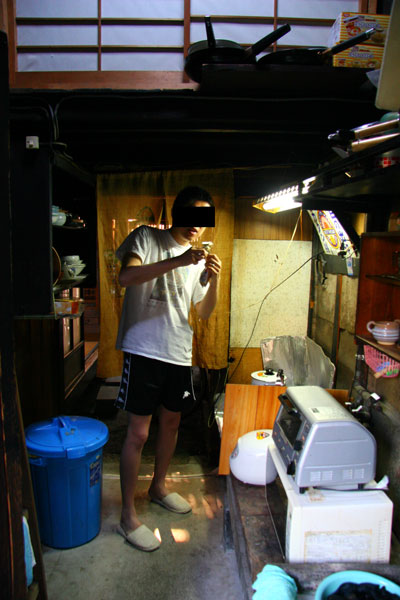
The chaotic little kitchen is said to be over 90 years old. Haphazard-looking and confusing at first glance, we gradually found it surprisingly well-equipped with a gas stove, toaster oven, rice cooker, microwave, and of course pots, pans, kitchen utensils, cleaning supplies, and everything else we needed to cook and serve meals.


The kitchen sink itself was a rare antique -- a long, slightly slanting stone basin likely built as part of the original house construction. In case you're wondering about the plastic basin, yes this is where we hand-washed our clothes. There are also a couple of coin-laundry places nearby for larger items like the bedding sheets, should you plan for a longer stay.


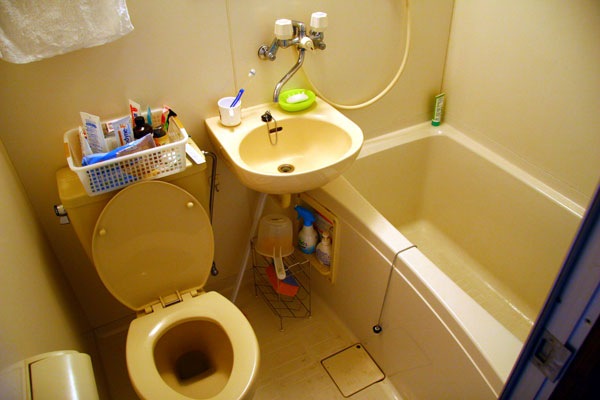
The bathroom is what the Japanese call a "Unit Bath", which is basically a factory-molded module including the bathtub, sink, toilet and even the toilet-paper holder. But the really cool thing is the basket of body lotions, shampoos and toothpastes "donated" by all the previous occupants, which gives this whole project a warm human touch. We didn't add to the collection, but we bought interlocking plastic floormats for the bathroom. The author of the English User's Guide said it very well ... practice some Western pragmatism and throw out the expired items!


For a few days we had the fortuity to blend in as nameless residents of the ancient capital, hang-drying our clothes in the garden and cooking simple meals in our little kitchen. My only complaint was ... a few nights were way too short for one of life's simple pleasures.


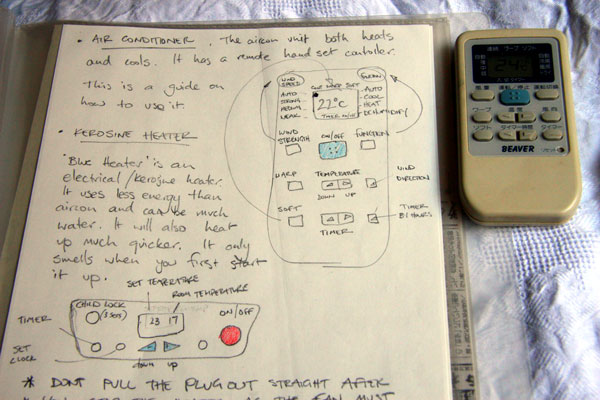
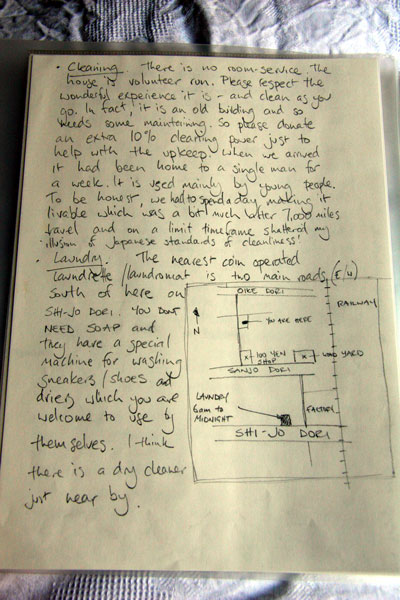
As mentioned, one of the house's former occupants has written an excellent, highly detailed User's Guide to the Eco-House Machiya in English. Just look at the clarity and depth of the instructions for operating the remote control for the Air-con, and you should have no doubt that any English speaker should get settled in no time.


The User's Guide contains instructions for all aspects of making use of the house's equipments, the proper way of setting up Japanese beddings, hand-drawn maps of the neighborhood, where to take out the garbage on which day of the week, and various tips left by different occupants. We did our little part by contributing another local map with the locations of a couple of restaurants and coin-laundry places that we discovered.


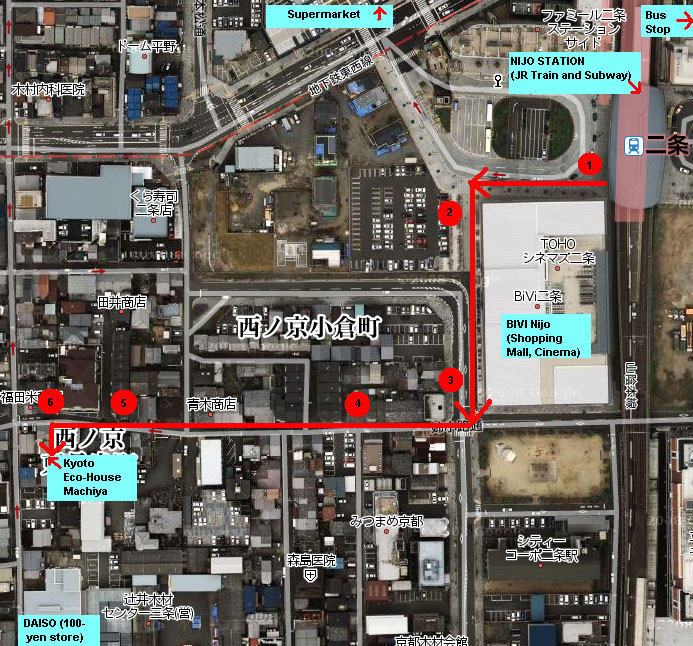
Location-wise this is a really convenient place to settle down and explore Kyoto. A five minute walk to the Northwest brings you to the Nijo Station, a local transportation hub with a JR train station, a subway station, popular City Bus routes such as #206 (to Kyoto Station) and #15 (to Higashiyama), and the Kyoto Bus route #72 (to Saga and Arashiyama). And if you arrive from other parts of Japan (eg.Tokyo) by JR trains, you just pay for your trip to Kyoto and the short trip from Kyoto Station to Nijo Station is free. The same applies in the opposite direction.


And in terms of living convenience, there's a huge 100-yen store (Daiso) just one minute walking distance to the South, a shopping mall three minutes to the East, and a large supermarket five minutes to the North. For foodies there are a few Izakaya and Sushi-ya, and for the frugal, the MOS Burger and Nakau fastfood outlets are located next to the train station.

If you've already booked your stay and are wondering how to find the house, just follow the red arrows on the above map, starting from the West Exit of the train station (JR Nijo Station). The numbers inside the Red Dots correspond to the photos below:


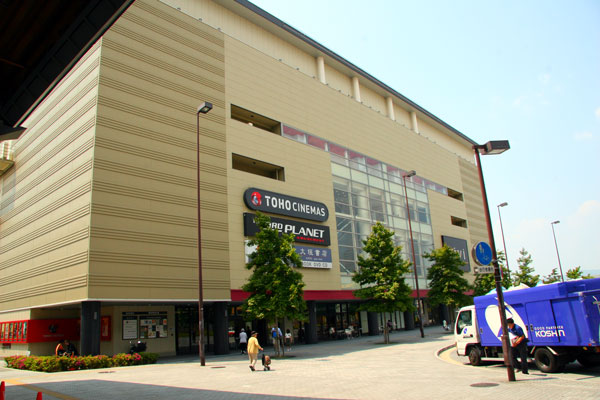
(1) Exit the JR Nijo Station on the West side, and you'll be facing the BIVI shopping centre on your left. Walk towards the far edge of the BIVI (in the direction of the blue truck).


(2) At the end of the BIVI, turn left. You're now heading south, down the West side of BIVI, and you'll be surrounded by parked bikes on the sides.


(3) As you reach the end of the building, carefully look for the narrow entrance of the little street on the opposite side of the road. See that 7-Eleven advertisement on the centre-right of the picture? The entrance to the street is just to the right of the advertisement.


(4) Walk down that little street -- now you're heading west inside a typical residential area, with neighborhood garages and coffee shops along the way.


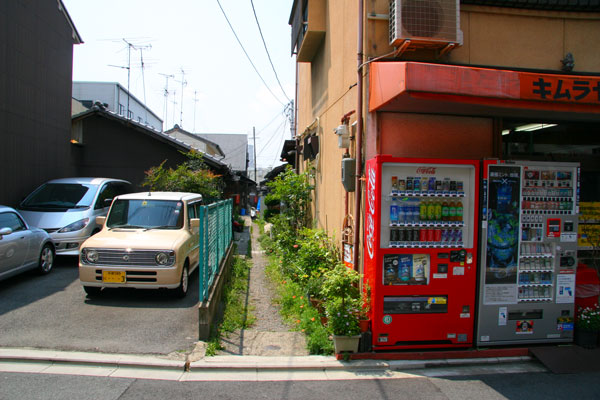
(5) Keep walking for one more minute, and you'll be nearing the end of the block. On your left you'll see a tobacco shop (named Kimuraya) with a couple of vending machines at the front. Just before the tobacco shop you'll see the entrance to a little lane.


(6) This is what the entrance to the lane looks like, with vending machines on the right side. Don't buy drinks from this vending machine though -- there's a cheaper (100 yen) one just around the street corner to right of this picture. Anyway, now walk down this lane.


Finally, Kyoto Eco-house Machiya will be on your right, less than 20 steps down the lane. The whole trip from the train station takes less than 5 minutes.


MORE INFO -- FROM THE ANONYMOUS AUTHOR OF THE USER'S GUIDE!

The whole Eco-House experience keeps getting more warm and more human. The anonymous author who hand-wrote the English User's Guide to the Eco-House Machiya has left me a couple of messages, loaded with excellent tips for future visitors. If you're planning to visit, you have to read this ...

Written by the Anonymous Author:

It's a wonderful place and I am so grateful for being able to stay there. I could not have afforded to stay in Kyoto without it being there. It gives one some privacy which is such a relief when traveling and the ability to sink into a local scene escaping foreign voices and attitudes in hostel type accommodation.

I hope those folks that do find there way there honor all that. Your practical directions and clear documentation complete 'the kit' for non-Japanese speakers, otherwise it is pretty impossible to find.

New regulations in Japan mean that new houses have to be so far apart and the streets wide enough for emergency vehicles to get down. My understanding is that the plot the old house is on is just too small to build a new house on.

For folks who have not been there, it is just a gravel lane between other mainly old machiya-type townhouse at present. Perhaps one day the landlord will be able to sell off all the land and it be developed, so do not expect the project to last forever. Its one of those little miracles kept running by goodwill alone.

Although he looks quite hippie, Sano-san, who comes to greet you, is a local priest. The place also gets used for day parties and events. Its tenants are a broad selection from across society and yet they all seem to respect it.

Each time we go back, someone has bought or left something else, fixed this or that, cleaned up here or there and so, somehow, it all keeps working.

Thankfully, there is not much evidence of slackers wrecking the place. Its helps that the Japanese, who are by far the largest proportion of users, are clean and have a social conscience.

If anyone make it to the Eco-house, there is a large "100 Yen shop" on the main street just around the corner that is open until 25:00 hours (no typo there, they must work 25 hour days explaining Japan increased productivity) where you can buy household and kitchen products. Someone needs to replace the slippers we bought a year ago!

One of the other larger machiyas, Paul has pictured, just around from the station has become a very attractive trendy coffeehouse where you can pick up a wifi internet signal. Next door to it, there is a no frills, community-run cafe which giving work to handicapped folk that does simple, hearty but cheap meals.

Food in Kyoto is generally great but I especially recommend the eat-as-much-as-you-like lunchtime buffets at Obanzai, just off Oike-Dori,

http://www.happycow.net/reviews.php?id=83

Better link ... Obanzai is family cooking style.

http://tamakikat.blogspot.com/2008/09/obanzai-restaurant-kyoto.html