Pages

Monday, May 28, 2007

Central Europe - The Raw Beauty of Budapest

Self-Guided Tour of Central Europe, Days 1 to 3 of 12
UNESCO World Heritage Site #1 on this tour


Budapest, the first stop on our tour of Central Europe, was a mystery to us. We heard rumours of a beautiful World Heritage city centre, with a culture and language very different from the rest of Europe, but knowing so little about Hungary we didn't bring with us any expectations. Which was great because when we left, we brought back memories of a city more beautiful than anything we heard about, and of great food, great architecture, and hot Turkish baths.


The Sights:

If there is one thing a visitor shouldn't miss on any trip to Budapest, it is the night scenary. Incredible, incredible night scenary. Certainly one of the most beautiful in the world. It is for this reason alone that Budapest is my wife's favorite place (even over Prague and Vienna) on our trip.


Budapest's beauty is so raw and powerful, which in my mind is due to the concentration of her most impressive sights along the banks of the Danube. On the Buda side there are the palace complex, the fisherman's bastion and Matyas church atop the castle hill. On the Pest side stand the spectacular parliament and an array of riverfront buildings with their 19th century grandiose. The illuminated curves of the Szechenyi chain bridge join the two sides. After dinner on our last night in Budapest, we took a leisurely walk starting from the parliament, along the Pest side of the Danube bank, then across the chain bridge to the Buda side. It was probably the most breathtaking night scenary I had ever seen, the type where you take a deep breath, hold it, forget to breath and almost pass out.


And there's more. The night scenary from the Fisherman's Bastion is equally impressive. Between its marble arches and doorways, one can get a wonderful panorama of the entire Pest, dominated by the gothic spires and dome of the grandly-lit parliament on the left side and the chain bridge on the right. It was a very romantic place, with the dim yellow light reflecting off the fanciful white castle walls and towers. And after about 22:00 at night, there are hardly any tourists left except for a few pairs who are too busy to mind others. Also, climbing the bastion's upper level was free at night, which I found astonishing since the scenary and the atmosphere was simply out of this world.


That's not to say Budapest is not impressive in the daytime. The moment I emerged out of Batthany Ter metro station, my eyes couldn't move away from the white marble spires of the parliament. Even though it was across the river, the mere size of the complex made it look as if it was on the opposite side of the road.


The parliament was not the only architectural spectacle on the Pest side. One early evening we started from the Opera metro station on Andrassy avenue and zigzagged towards the parliament. Everything from the Victorian-era subway station to the Opera house to the nameless statues and frescos on any of the buildings lining the Andrassy were objects of beauty.


And if you like beautiful architecture and frescos, the Buda side has even more, starting with the Matyas church. Certainly this was one of the most striking church interiors I've seen, with its bold colours and details more than making up for its relative small size. The warmth of the gold red and blue fresco patterns contradicts the dark, solemn lighting, and produces ... a comfy place to rest from the 28 degree afternoon sun outside. Hah! My wife had a hard time getting me to move.


Right outside the church is the Fisherman's Bastion, not as incredibly romantic as in the evening, but still a beautiful place for pictures and a wonderful view of Pest. As mentioned above, you need to pay (something like HUF600) to climb to the second level in the daytime, so wait until the evening when it's free.


Escaping from the afternoon heat, we went underground to the Buda Castle Labyrinth. It's not easy to find, and we passed by the entrance not realizing it was the entrance. The catacombs was once a storage chamber in the medieval ages, fortified with concrete in the 20th century and now converted into a mini underground themepark. An hour-long walk took us through a Lascaux imitation, stone statues, and a fountain flowing with red wine for the visitor's refreshment. The most fun was a chamber with no lights, and visitors had to navigate and move forward following a chain nailed to the side of the chamber, eventually leading to the exit. Not really worthy of the HUF1600 entrance fee, but a passable diversion on a hot day.


Last but not least, there are the baths which Budapest is famous for.

Sorry I have no pictures to show, since we went to the Rudas bath at 23:00 at night and did not take our camera. But I assure you, having a good hotspring bath while star gazing through the vents of the ancient Turkish dome is more than worth the HUF2200 entrance fee. For nice pictures, go to the official site at http://www.spasbudapest.com.


Basically, we took our flip-flops and towels and hopped on Tram 19 to Dobrentel Ter. Upon paying the entrance fee, we were given a ticket and were directed to the locker room. Each person claims one locker, which is a tall wooden stall inside which you can change into your swim wear. After changing, you simply leave your belongings inside, take the locker key and head to the baths. There was one big central pool under the Turkish dome, with lukewarm water. In the four corners of the room there are four small pools of various temperature. The hotspring lover in me went for the hottest pool where I had to slowly immerse into the 42-degrees water over a couple minutes. After 10 minutes or so I climbed out and sweated like a pig, which was exactly the kind of hotspring I needed after a long day of walking.

One last note, the website said that if you leave within 2 hours, you get part of your entrance fee back (HUF600 when I checked before the trip). But that didn't seem to apply to night bathing. Oh well.


The Food:

A La Carte
29 Iskola, Budapest I
http://www.budapesthotelstart.com/budapestinfo/alacarte.en.html

The night we arrive, we were too tired to walk around and went to a little restaurant right across from our apartment called "A La Carte". The food was good; the service was not. For anything we tried to order from the regular menu, the waiter would say "NO, we have our special soup/fish/wine..." and then go on a speech. We asked what the prices were for these "specials", and the price difference was noticeable but wasn't huge and so we did tried these so-called specials. Everything was good, it was just that the price was slightly inflated and we didn't appreciate our waiter's special service.


Fish soup (Halaszle), a Hungarian favorite. Intense fish (not fishy!) flavor, strong spices, peppery and very good with bread. My wife loved it.


I had a spicy broth with sausages and vegetables. I remember it being good but I can't remember much else so it couldn't have been really that good.


The 2-person main course was three kinds of grilled fish - catfish, salmon, and I forgot the third. Good, but not spectacular.

With a beer (Gösser tastes good!) and a cocktail (made with Tokaji Aszu, they said), two soups, and a main course for 2, the bill came to about HUF7500 (~CAD$47) after tips.

If you intend on trying our waiter's "special menu", A La Carte's address is 29 Iskola, near Batthyany Ter on the Buda side.


Budavari Matyas
Hess Andras ter 4, Budapest I
http://www.budavarimatyasetterem.hu

This was one of our two best meals on this trip. Incredible foie gras. Excellent.

We didn't even plan on going to this place. The original plan was to take an afternoon nap then head to Tabani Kakas on Attila utca, but it was closed for some unknown reason. So we wandered up castle hill, passed by this place and saw the foie gras pricing on their menu, checked the prices on neighboring Fortuna House (http://www.fortuna-restaurant.hu), then decided to come back to this place.

There was a stage for live music, but the musicians had left by the time we arrived (around 20:30). We didn't mind much, as our main purpose was to sample the famous Hungarian goose liver.


First course was stuffed mushrooms with goose liver puree. Crispy batter, moist and flavorful inside. Mmmm...but it gets better.


For main course we ordered two foie gras dishes to share. This is breaded foie gras with grilled vegetables. Flavorful, moist, and not too oily, but still a little less flavorful than I expected. Veggies were excellent.


This was the best dish. Seared foie gras, hungarian style. Incredible texture and flavor...perfect medium-cooked combined with a thick, fruity sauce to balance out the oiliness. Three large medallions of goose liver, each as thick as my finger, at only HUF3300 (CAD$20).

With beers, the entire bill for the night, including tips, came to about HUF12000, which is not even CAD$80. At a very prestigious location too, right across from the Hilton and three minutes walk to the Fisherman's Bastion for some amazing night scenary. We wouldn't even have discovered the magic of the Fisherman's Bastion at night had we not have dinner there.


Central Market Hall
Vamhaz Korut 1-3
http://www.csapi.hu/


We also went to the Central Market Hall to bring some foie gras home and check out the local produce. Goose livers everywhere! Probably half of the stalls on the lower lever were meat stalls, and goose liver was the spotlight. Hundreds of whole livers, each shaped like a small loaf of bread, were stacked on top of each other waiting for buyers. Knowing that customs won't let us bring uncooked ones home, we settled for some canned liver puree for our parents.


We also bought a bottle of Tokaji Aszu 3 Puttonyos. Even the bottle label tells the story of Louis XIV's famous quote: "Wine of Kings, King of Wines." I have to agree with old Louie, as my wife and I, not even being regular drinkers, finished about 2/3 of it one evening. This bottle cost about HUF1300 (CAD$8) at the Central Market Hall. But later we found it at the Spar supermarket selling for less than HUF1000. Money well spent anyway.


Transportation:

We took Easyjet from London Gatwick and landed at Budapest's Ferihegy terminal 1. It was a very modern terminal with an English-speaking info centre, but most importantly an ATM accepting all major credit cards, as well as my Canadian bank-issued ATM card. After getting some local currency, we bought single-trip bus tickets from the newspaper shop. Bus 200 stops just outside the terminal, with a clearly marked bus-stop and a posted timetable.


At the time of writing, there is a whole array of transit tickets, the pricing of which you can find on Wikitravel (http://wikitravel.org/en/Budapest). We bought single trip tickets (HUF230) to take Bus 200 to the Kobanya-Kispest metro station, then bought a booklet of 20 tickets (HUF2050) at the BKV (Budapest's public transit company) counter for the rest of our stay. For our busy Day 2, we bought 1-Day tickets (HUF1350) at the BKV counter at the Batthyany Ter metro station. Sound confusing enough? This is all because BKV's 1-Day and 3-Day tickets' validity start from midnight on the day of use, NOT from the exact time of use. So if you're arriving in the late afternoon like we did, there is little point in buying a Day Ticket since it will expire in a few hour's time. Also, Day Tickets are pricy and you'll need to take 6 trips in a day to make a 1-Day ticket worthwhile. In this regard, the public transit in Vienna and Prague are much, much friendlier.


On our departure, we bought train tickets to Vienna at a hard-to-find international ticket counter at the Keleti train station. Roughly 13 Euros per person, which is way cheaper than the 23.5 Euros that the train company (MAV) quoted by email. CAD$20 for a comfy 3 hour train ride was very reasonable.


Accommodation:


We rented a historic-looking apartment on the Buda side of the Danube just off Batthyany Ter, with a 14-feet ceiling, a loft that can sleep another two if necesary, and a full kitchen with gas range. It was one minute walking distance to a Spar supermarket, two minutes to the Metro (Batthyany Ter) and Tram 19 (which runs along the Danube), and three minutes to the riverbank of the Danube. It was also practically right across from the impressive neo-gothic parliament building on the other side of the Danube. Right above the apartment was the castle district, with the grand palace complex in the distance. All that surrounding beauty and convenience for about HUF11000 (~CAD$67) per night.


Our Ideas for Day Trips:

1) Our choice was the medieval village of Holloko, a UNESCO World Heritage Site about 2 hours away by bus. It's a great place if you like rustic villages and medieval castles. Please see my Holloko page for details.

2) Esztergom is a town situated at the entrace to the Danube Bend upstream from Budapest. It also boasts Hungary's largest basilica and the oldest royal court. It's 1.5 hours by bus, and you can take a leisurely afternoon ferry through the Danube Bend and back in Budapest in 4 hours.

3) Vysehrad is another town on the Danube Bend, a little closer than Esztergom and accessible by both bus and ferry. The big attraction is the medieval castle and its hilltop view of the Danube Bend. The ferry from Esztergom stops at Vysehrad en route to Budapest.

4) Szentendre is probably the most popular place for day trips. It looks like a picturesque little town, with a large open-air museum of traditional village houses. It's less than an hour away by HEV (suburban rail) from Batthyany Ter.


Miscellaneous Comments:

The yogurt here is so good!! Smooth, creamy, like marscapone cheese....mmmm.


My wife had an excellent sausage roll at a small bakery situated on the left side of the tracks of the Keleti train station (if you're coming up the escalator and facing the trains). For the remainder of the trip she tried to look for the same kind of sausage roll in Austria and the Czech Republic, but none came even close. She claims the sausage had the same flavor as those used by Kobeya (http://www.kobeya.co.jp) in Japan. Sound strange? But I have to agree with her after a bite!


Links to Transportation and Sights:

Bus 200 (connecting Airport to Metro) - http://www.bkv.hu/english/busz/200.html
Budapest's Public Transit - http://www.bkv.hu
Train Schedules - http://www.elvira.hu
Long Distance Bus Schedules - http://www.volanbusz.hu/english
Buda Castle - http://en.wikipedia.org/wiki/Buda_Castle
Matyas Church - http://www.matyas-templom.hu/
Buda Labyrinth - http://www.labirintus.com/
History Museum - http://www.btm.hu/
National Gallery - http://www.mng.hu
Parliament of Hungary - http://www.mkogy.hu/parl_en.htm
Central Market - http://www.csapi.hu/
Roman Aquincum - http://www.aquincum.hu/menuoldalangol.htm
House of Hungarian Wine - http://www.magyarborokhaza.hu/
Public Baths - http://www.spasbudapest.com/


Other Interesting Restaurants We Didn't Try:

http://tabanikakas.freeweb.hu/
http://tabaniterasz.hu
http://www.fortuna-restaurant.hu/


Cheap Accommodation Links:
(Double Room with Private Bathroom)

http://www.agapeguesthouse.com
http://www.artsiter.com/budapestapartments/index.html
http://www.taymer.battanet.hu/vacanze.htm
http://www.budapestcheapflats.com/html/alkotmany.htm
http://www.trav.com/wri-9128/BudaCastleApartment
http://www.rentalsystems.com/book/budapestapart
http://www.budapestrooms.com/galamb/index.php
http://www.holidaycafe.info

Sunday, February 11, 2007

Winnipeg - 9 Cool Spots for Tourists

In the summer of 2006 my wife and I went to visit her sister's family for a week. Friends kept telling me it's not an interesting place as far as tourism goes, but we've got insider information, and we spend a week in the city without ever getting bored. So I decided to make a list of our favorite places to kick back and relax at the geographical centre of North America.
1. Bears On Broadway

Website: www.bearsonbroadway.com

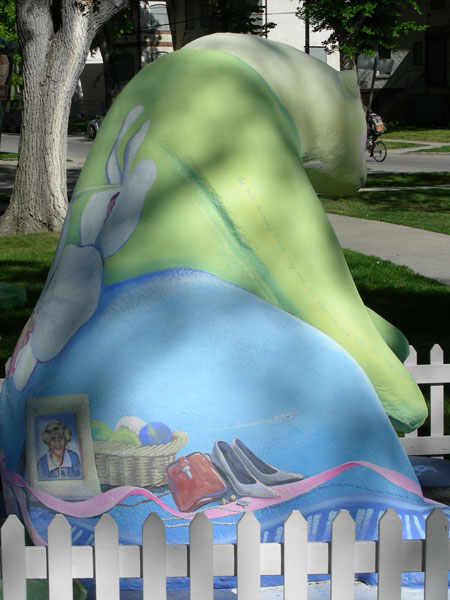
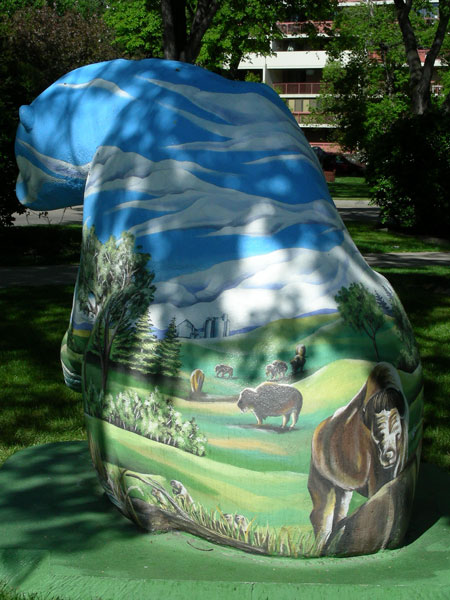
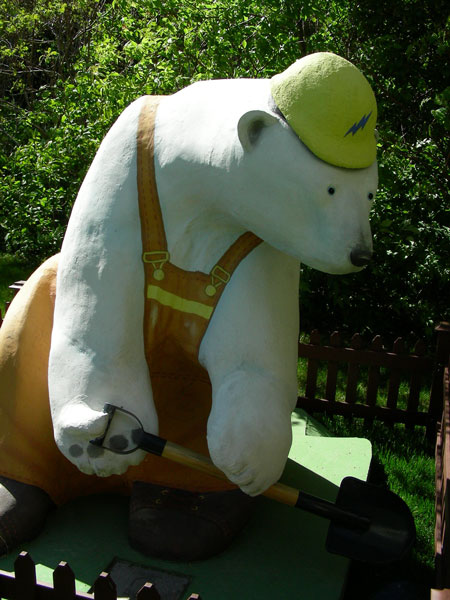
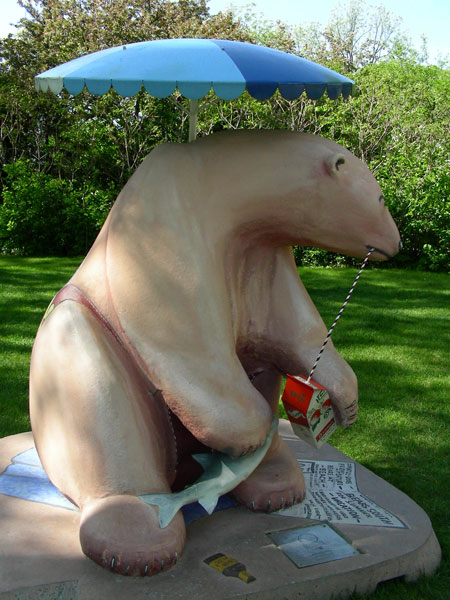
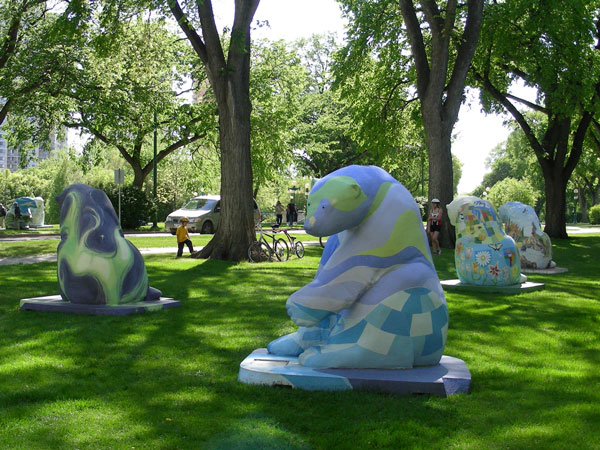
During 2005-2006, 60 or so polar bear scultures were decorated by artists and placed around the city (mostly around Winnipeg's Broadway area), raising money for CancerCare Manitoba. When we arrived in the summer of 2006, we saw a number of them around the Golden Boy (provincial parliament building). Not only are they chick magnets (obviously), but some of them are quite fun and creative.


2. Golden Boy

Website: http://www.gov.mb.ca/legtour/golden.html

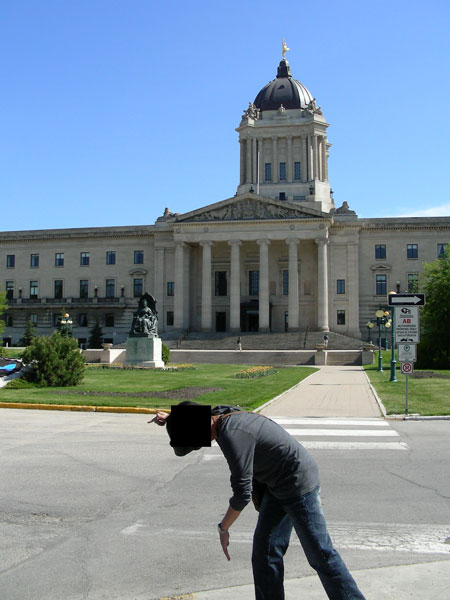
The "Golden Boy" is what Manitobans call their provincial government legislative building, referring to the glittering statue placed at the top. The architecture is neo-classical, which seems to be typical of provincial government buildings in Canada that I've seen. Good photo ops for photographers I guess. But my wife was more interested in the polar bear sculptures placed outside the back of the building.


Doing my best impression of a Manitoban bison...with mad cow disease I guess.


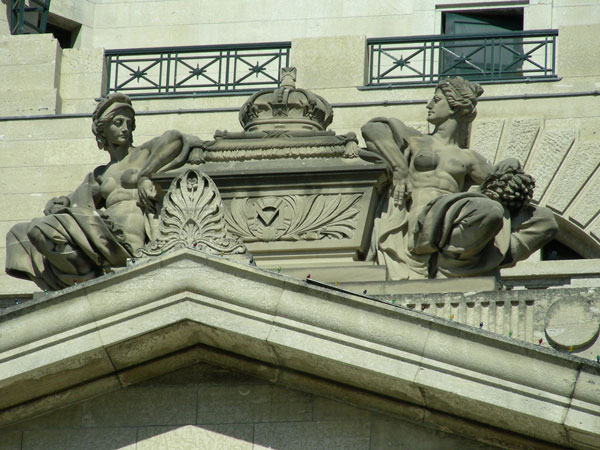
Some of the exterior sculptures were quite ornate for a provincial government building.


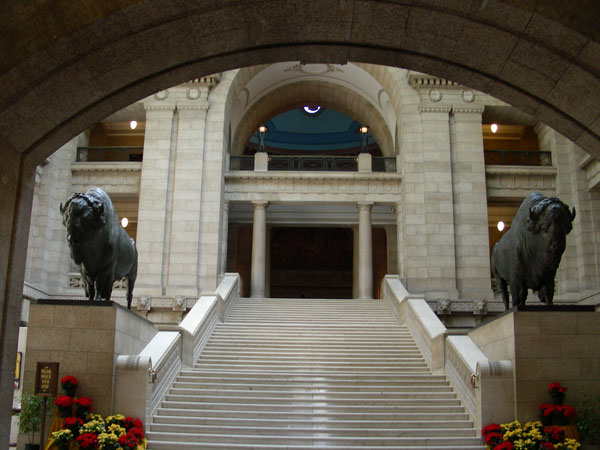
You just can't escape from bisons in Winnipeg. Two enormous scultures here guards the foyer of the building.


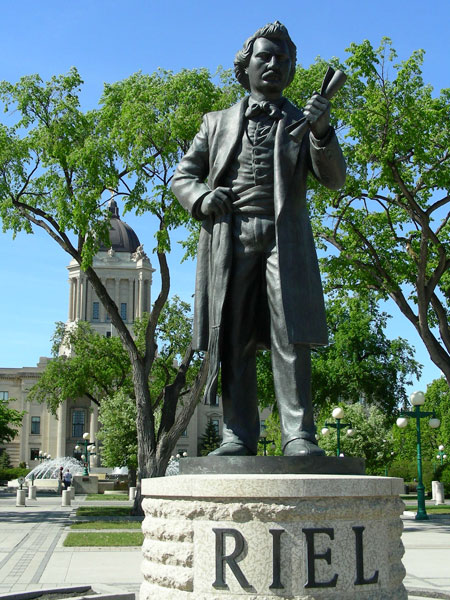
A statue of Louis Riel, a father of Canadian confederation, or traitor. Whichever version you prefer, this is one tough guy.


3. Lower Fort Garry

Website: http://www.pc.gc.ca/garry

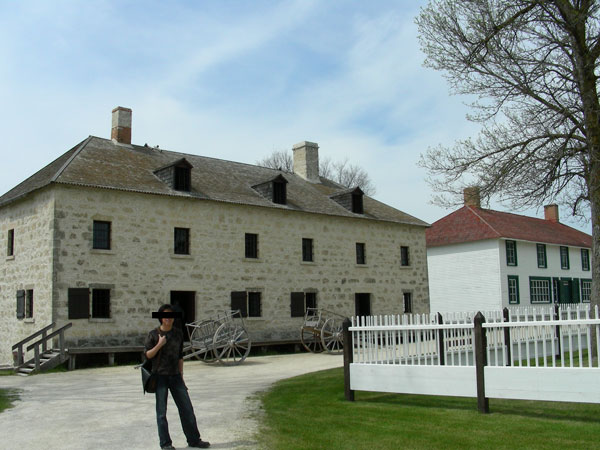
This is IMHO one of the star attractions of Winnipeg, although technically it's outside of the city. This is the oldest existing stone fort in North America, restored to its original form and complete with costumed actors to bring visitors back to the early 1800's. Entrance cost $7.15 as of 2007.


Authentic mid-19th century trading fort in the Canadian frontier.


An interpreters in full costume welcomes visitors. This guy is a carpenter living in his tiny living quarter.


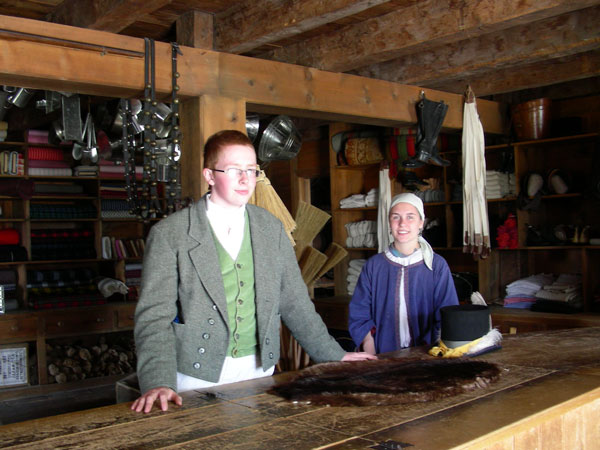
Trading house, where one could buy anything from leg-traps for fox hunting to fine china imported from Britain.


Office of the head trader, one of the few educated men in the fort.


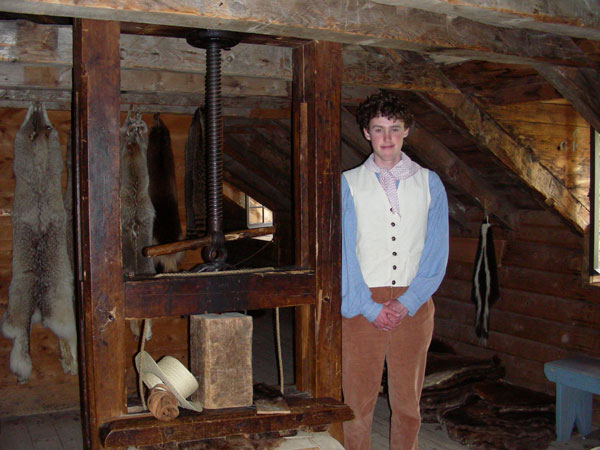
This is the fur press, where beaver hides are packed into cargo cubes before shipping to Europe.


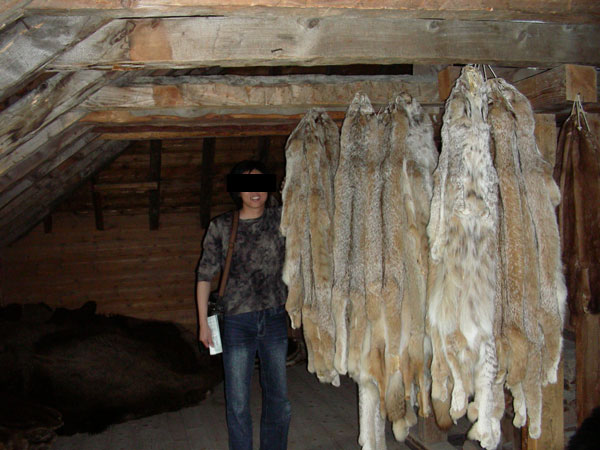
Grey foxes eerily hang from the dark ceiling. Hundreds of beavers, bisons, bears, and muskrats fill the rest of the room. It's almost surreal.


MORE COMING...WHEN I HAVE TIME...HAH!

Tuesday, November 21, 2006

Adams River Salmon Run - Mini Guide

Want to see the world's largest, most visually impressive salmon mating ritual? This guide is meant for self-guided photographers or tourists like yourself.


WHAT IS IT?
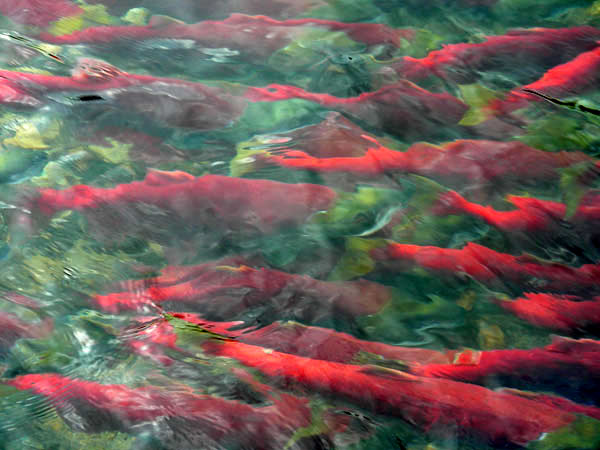
It's a spectacular wildlife viewing event, happening once every 4 years. You will see millions of bright fiery red salmon swimming upstream at the bottleneck of a small river, producing a carpet of red under the shallow water.


WHY IS IT SPECIAL?

Imagine you're destined to die next month, but before you die must fulfill your life mission by battling hundreds of kilometres upstream through fierce rapids, waterfalls and predators to reach your ancestral home and spawn your offspring. Also you must complete this mission without any food until your death. You have a one-in-five chance of succeeding. Even if you succeed, you'll still die from diseases and parasites that will infest your battle wounds. And you'll die childless, while your eggs will hatch in a few more weeks to feast on the nutrients released from your decaying body. This is your fate, if you're an Adams River salmon.


WHERE IS IT?
Adams River is situated in the mountains of Western Canada, about 4.5 hours driving distance from Vancouver or 2.5 hours from Kelowna.


WHEN IS IT?
For the sockeye (red) salmon, the next dominant run (most visually impressive) will occur October 2010, followed by 2014, 2018 etc. A sub-dominant run (less impressive) will occur October 2007, 2011, 2015, 2019 etc. But the river is the spawning ground for many different species of salmon, so you'll see some returning salmon every year.


WHAT IS IT LIKE?
Ten thousand people from around the world will visit during a four week span. During our visit there were German TV and Italian TV crews, Japanese and Taiwanese tourists, and of course the Canadian government agencies and university researchers. It is NOT a quiet wildlife viewing trip - actually it's more like a 2000-people international convention of wildlife lovers and photographers.


WHY DO YOU PUT THIS PAGE AMONG YOUR FOOD PICS???
Let's see, because I'm a big fan of sockeye salmon, and the wonderful flavor of its meat, its sweetness and its versatility to be served raw, cured or barbecued...oops bad joke...I better return to the topic of ecological tourism.

Perhaps you love photographing wildlife, or simply love to get in tune with Mother Nature, or just a backpacker looking for a cool reason to visit Canada. If you can schedule your Canadian trip to coincide with this rare event, you'll witness a very special display of courage, destiny, death and life.


-----------------------------------------

PRE-TRIP PLANNING

Visit the website of Adams River Salmon Society (http://www.salmonsociety.com) to confirm that there will be salmon for you to see during your visit. As described above, the next dominant run for the sockeye salmon will be in the autumn of 2010, most likely in October. If you cannot go in 2010, you may want to see the sub-dominant run of 2007 or 2011, and enjoy a much quieter visit. MOST IMPORTANTLY, if you go in a dominant year you'll want to avoid the Canadian Thanksgiving long weekend, if you don't fancy fighting for prime photo spots against thousands of fellow tourists.


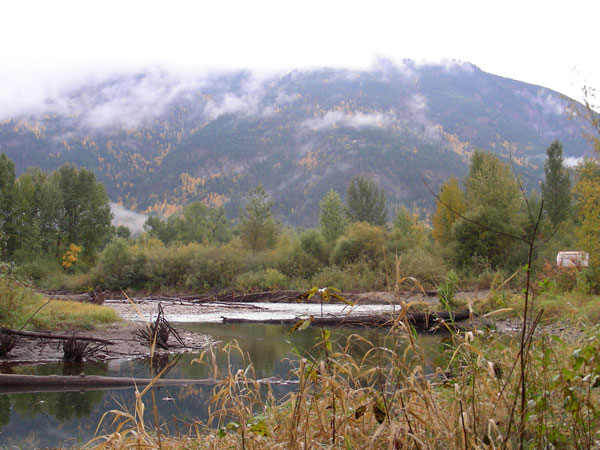
Autumn at Adams River. The final resting place of the spawning salmon, as well as the cradle of the young.

Transportation

Visiting Canada does not require a Visa for citizens of the USA, UK, Japan, most EU members, and many other countries. If you're unsure, check with Immigration Canada's website (http://www.cic.gc.ca/english/visit/visas.html).

The closest major airports to Adams River are Vancouver and Kelowna. Vancouver International Airport is the major gateway between Canada and the Pacific Rim and is served by many international airlines. Kelowna has a smaller airport designed mainly for regional air traffic. The driving time is roughly 4.5 hours from Vancouver, or 2.5 hours from Kelowna.


Vancouver is a pleasant city with mountains, coastlines, and great food. If you have time, I recommend flying to Vancouver and spend a couple days before driving to Adams River.

There is NO public transportation to the salmon viewing areas of Adams River, which means I would highly recommend visitors to either rent a car, or to join one of the local eco-tourism operators (See http://www.hellobc.com).

If you plan on hitch hiking, which I do NOT recommend, then you should at least book a room at one of the few hotels or bed-and-breakfasts in the immediate area and then try to hitch hike to and from the salmon viewing area. There are NO campgrounds within the Provincial Park where the salmon river is located. Bears roam the park at night so you don't want to camp there illegally. Greyhound bus (http://www.greyhound.ca) will get you from Vancouver or Kelowna to Chase, which is just a 10-minute drive from Adams River.


The smell of dying salmon attracts bears. Don't even think about camping here!

Accommodation

Accommodation is easy if you drive a car, as there are tens of hotels, motels and bed-and-breakfasts from Kamloops (45 minutes drive from Adams River) to Salmon Arm (also a 45 minutes drive, from the other direction). There are accommodations in the communities of Chase, Sorrento, and Squilax which are within a 15-minute radius. If you do not drive a car, as mentioned above you should try to book a room closer to the salmon viewing area, then perhaps you can beg (or bribe) someone at the hotel to give you a ride, or you may be able to hitch hike there. In any case, plan on paying CAD$70-$100 per night for a double room.

The following are some of the hotels and B&Bs in the nearby area:

Immediate Area (near Squilax)
http://www.quaaout.com/overview.htm
http://www.hiddenriver-bb.com/
http://www.jade-mountain-motel.com/

Chase
http://www.sunnyshuswapbb.com/

Sorrento
http://www.shuswapmaples.com/rates.htm
http://www.wsresort.com/2006_rates.htm
http://www.bbexpo.com/bc/evergreens.htm
http://www.shuswaplakemotel.com/
http://www.bbexpo.com/ingrids/default.html
http://www.bbexpo.com/bc/oreillys.htm
http://www.thimbleberrycottage.com/index.html
http://www.solitude.ca/RESVAT.HTM

Kamloops
http://kamloops.travel.bc.ca/

Salmon Arm
http://salmon-arm.travel.bc.ca/


What to Bring

Warm, water-repellant clothing is a must, as autumn in British Columbia is often rainy. Expect 0-10 degrees Celsius in the evenings and 10-20 degrees during daytime. Comfortable walking shoes are required since you will tread on park trails and rocky river banks. Water-proof hiking boots are even better.


Bring good walking shoes or boots, as you will likely need to walk down the rocky river shore to take close pictures.

A polarizing filter is highly recommended (I regret not taking one from an obsolete SLR camera), whether or not you're a photographer. Even for viewing with naked eyes, a polarizing filter will tremendously help filter out the reflection at the water surface and let you see the salmon much more clearly.


---------------------------------------------

GETTING THERE

You will first want to visit to the official website of the Roderick Haig-Brown Provincial Park (http://www.env.gov.bc.ca/bcparks/explore/parkpgs/roderick.html).

If You Drive

> From Vancouver - Take Highway No.1 to Hope (1.5 hours) and fill up on
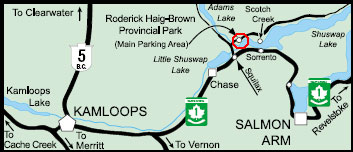
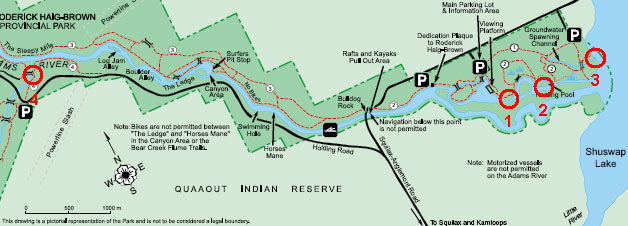
gasoline. Then you can choose to pay $10 to take the quicker (2 hours) Highway No.5, or to take the longer (3 hours) but more scenic Highway No.1. Either way you'll end up at Kamloops. At this point refer to MAP 1. From Kamloops, take Highway No.1 eastbound, past the town of Chase and start looking for the signs of "Roderick Haig-Brown Provincial Park", or "Squilax-Anglemont Road". At this point refer to MAP 2, follow the Squilax-Anglemont Road and the signs of the Provincial Park to get to one of the three parking lots of the salmon viewing area.


MAP 1: Highway Map

> From Kelowna - Take Highway 97 northbound towards Vernon. At Vernon take 97A
northbound, and then switch to 97B towards Salmon Arm. From Salmon Arm take Highway 1 westbound, past the town of Sorrento and start looking for the signs of "Roderick Haig-Brown Provincial Park", or "Squilax-Anglemont Road". At this point refer to MAP 2, follow the Squilax-Anglemont Road and the signs of the Provincial Park to get to one of the three parking lots of the salmon viewing area.

If You Take Public Transportation

> From Vancouver or Kelowna - Refer to the Greyhound bus schedule at
http://www.greyhound.ca. The nearest Greyhound bus stop is in the town of Chase. Greyhound buses from Vancouver to Chase usually run about three times a day, and buses from Kelowna to Chase depart at least once a day.

When you arrive at Chase, you'll have to rely on your hitch hiking and negotiation skills. Or spend money and call a taxi. Good luck.

-----------------------------------------------

WHERE TO VIEW THE SALMON

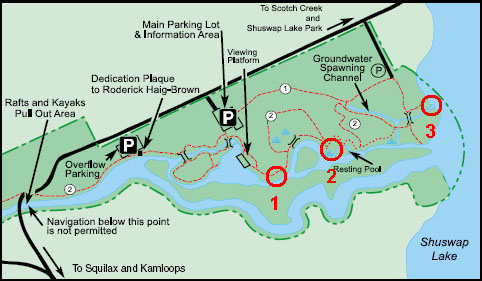
Most people first go to the "viewing platform", which offers a wheelchair-friendly spot for casual tourists to take a distant look at the salmon swimming 20 feet below. Turn left or right and walk along the trails, and you'll find many view points to look at the salmon swimming in the river below. But these are not the best places to take close looks or photos at the salmon.

My favorite salmon viewing areas are outlined in these two maps.


MAP 2: Large Park Map


MAP 3: Detailed Park Map

1) Walk towards the rocky river bank, where it is probably crowded with photographers already. This is the shallow, rocky section of the river where the river current is fastest and the salmon are fighting for their lives to hang on and not get swept down the river. A salmon would remain stationary within a group formation or behind rocks to conserve energy and wait for a chance to make a 50-metre sprint ahead, after which it will go into energy conservation again. This is how every successful salmon must proceed upstream during this treacherous section of the Adams River. This is a great place to take photos.


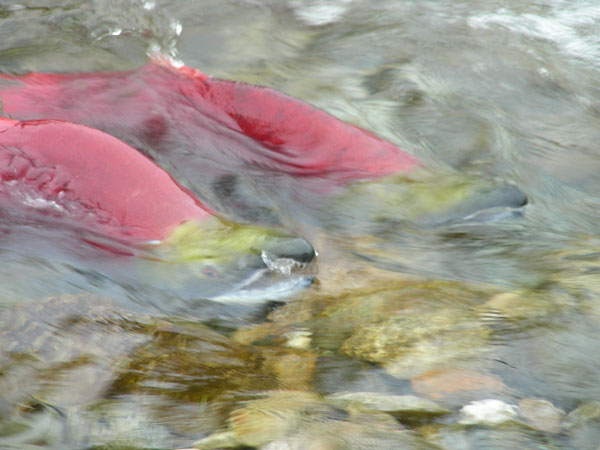
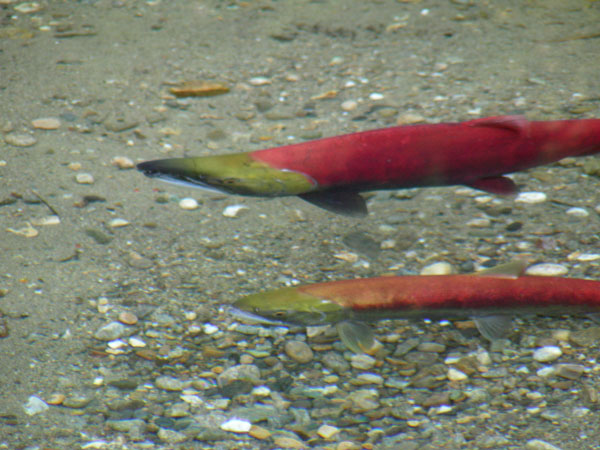
Two male salmon engaging the fight of their lives - not against each other but against mother nature. These two just finished their resting routine and are starting another short dash upstream.


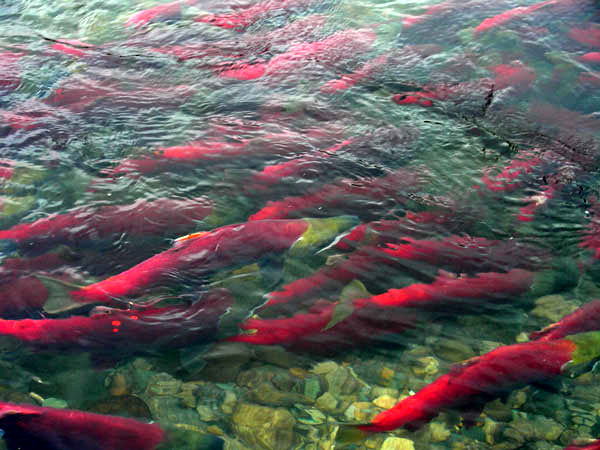
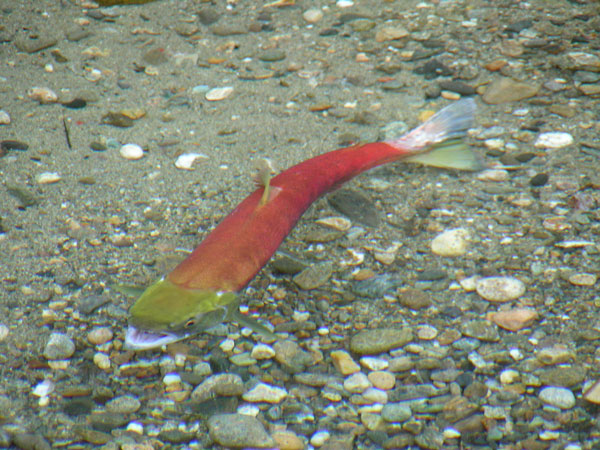
A red carpet beneath the water surface. Don't be like me -- bring your polarizing filter.

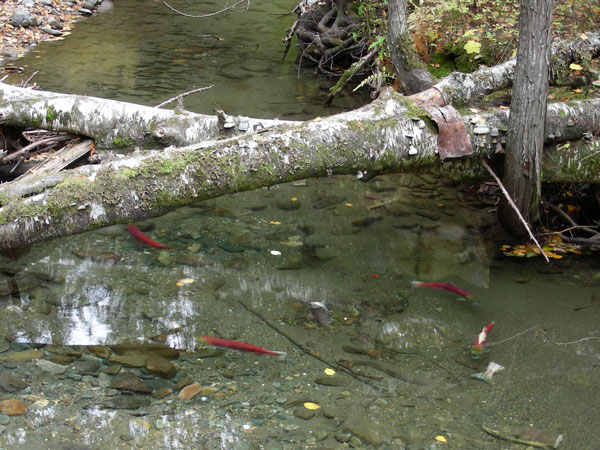
2) Between the park trails and the rocky river bank, you'll find some quiet river channels protected from the rushing waters. If you're lucky, you'll find some salmon getting trapped in this area and getting ready to spawn. You'll see typical spawning behavior such as a female digging its spawning nest by thrashing its tail against the gravel bottom, and the males fighting for the right to mate with the female. I wasn't lucky enough to watch the actual spawning, but the foreplay was interesting.


Male and female salmon in the spawning channel. This male was fending off two other males while the female kept busy digging her spawning nest.


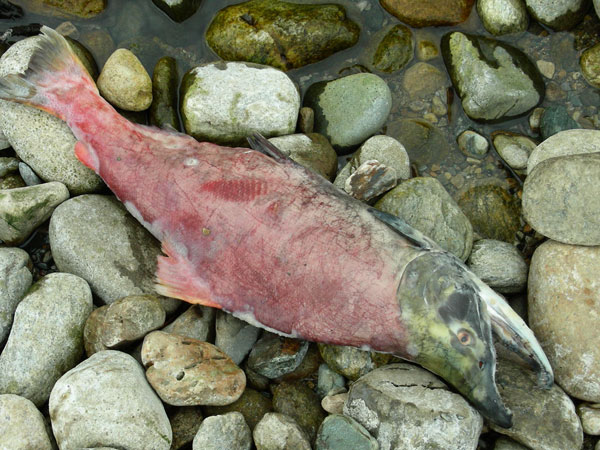
Note the battered tail of this dying mother. Her spawning nest would be built at the expense of her life, as she will likely die from the infections on her wounds.

3) Near the mouth of the Adams River (where the river empties into the Shuswap Lake), you'll find the highest concentration of salmon trying to swim into this bottleneck. You may see recreational scuba divers diving into the water to swim with the salmon. According to one of the divers, the river mouth is so crowded with fish that "you can't even move." If you can get a small boat or kayak, and an underwater camera, I imagine the scene would be quite amazing.


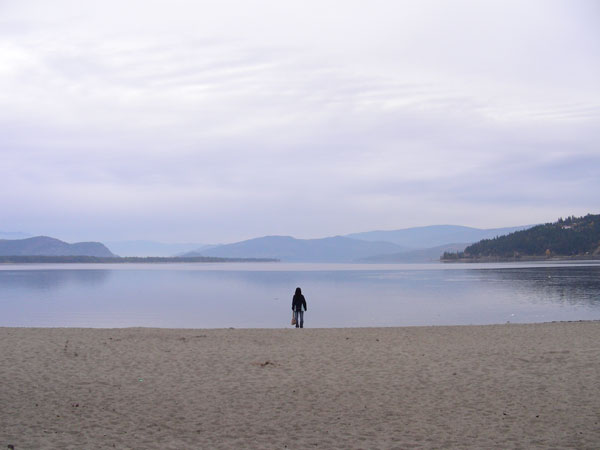
The deceivingly peaceful Shuswap Lake. Immediate to the right is the mouth of Adams River so hundreds of thousands of salmon are actually swimming beneath the surface, and can be often seen leaping out of the lake.


4) If you leave the popular parking lots and drive further upstream, you'll get to an area where there are trails leading to the upstream spawning grounds. This is another great place to see spawning salmon. But be warned that salmon attracts bears, so it would be a good idea to make noises and travel in groups on these less-popular trails. In fact, I actually saw a small cave beside the trail which might or might not be inhabited by a bear.


Pairs of salmon search for a nesting place at the upstream spawning ground, just a few steps from the cave. Note the salmon that had its tail cut off at the bottom right corner. This was actually the scientists counting the number of salmon that had successfully spawned and died.

Just a word of caution - bears have been seen to feast on the amazing supply of salmon in the park. Do NOT take walks in the park before dawn and after dark. As a local inn-owner advised me: Arrive after 9:00am, and leave the park before 6:00pm and you should be safe.